The APK lets you install the Android app when it isn't available from an app store. The file should come from a trusted source, with a recent version and a page that clearly explains the installation.
Before downloading, check the file name, the domain, the update date and the permissions Android requests. Avoid any APK found in a chat group or on an unknown page.
On the Google Play Store, availability can change depending on your country and device. If the app doesn't appear, don't grab a random file: check the APK details first.
200% welcome bonus on your 1st deposit — cap depends on your country and currency (BDT, INR, PKR, NGN, KES…)
Enter it only if the offer is visible in your account. A bonus depends on the country, currency, minimum deposit and wagering.
Bonus & promo code
1xBet welcome bonus & promo code
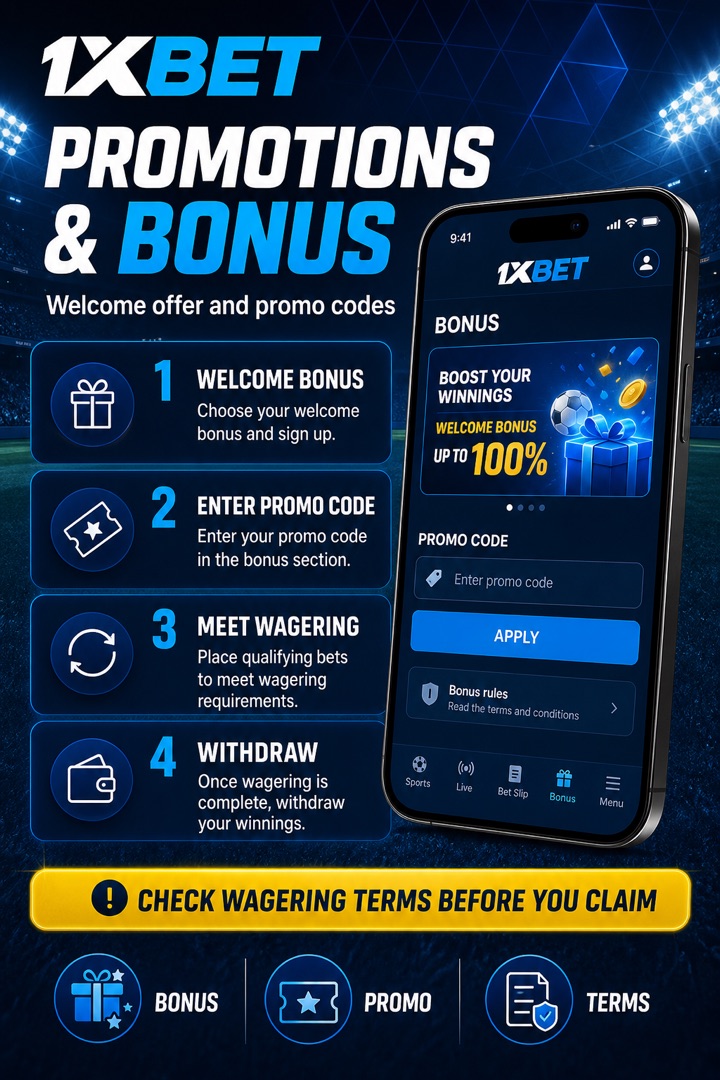
With the promo code Maxx200bet, your first deposit is boosted by 200%. The bonus cap depends on your country and currency (BDT, INR, PKR, NGN, KES…).
Exclusive promo code
Maxx200bet
Enter it during sign-up, only if the offer is visible in your account. 18+ · responsible gambling.
Activate the bonus in 3 steps
1 Create a 1xBet account (one-click, by phone, email or social media).
2 Enter the promo code Maxx200bet in the dedicated field during sign-up.
3 Make your first deposit: it is credited +200% according to the terms in your country.
Calculate your bonus (200% rate)
Your deposit6,000 BDT
+
200% bonus12,000 BDT
=
Playing balance18,000 BDT
Illustrative calculation at the advertised 200% rate. The bonus cap and the wagering requirements depend on the country, the currency and the 1xBet rules visible in your account.
Bonus wagering requirement
Value (Bangladesh)
Type & rate
1st deposit · +200%
Bonus cap
up to 12,000 BDT
Min. deposit for the bonus
120 BDT
Wagering (rollover)
x12 of the bonus in accumulator bets
Selections per accumulator
≥ 3 events
Minimum odds
≥ 2.10 per event
Validity
30 days
Indicative terms for Bangladesh, reviewed on 16 June 2026 from the rules visible in the 1xBet ecosystem and to be confirmed in your account before playing. Voided bets, handicaps and totals are excluded from wagering. An x5 variant (odds ≥ 1.40) may also appear depending on the offer.
Screenshots
App screenshots
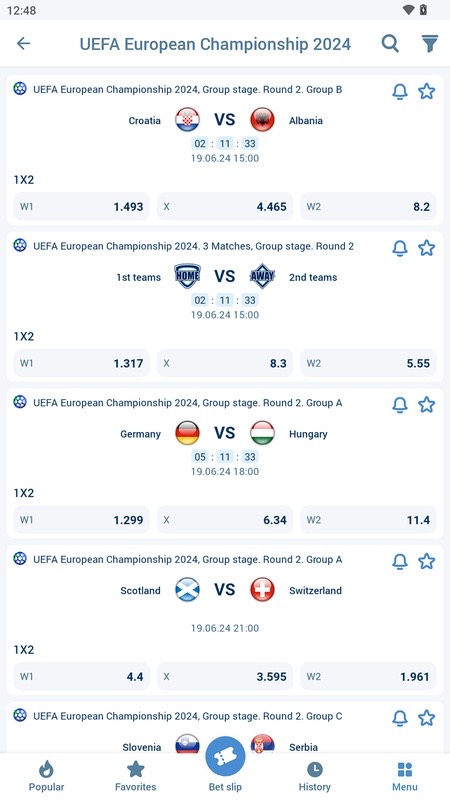
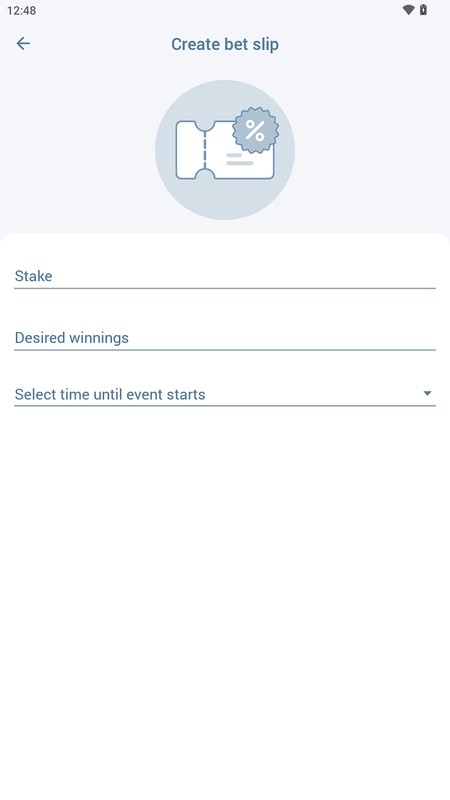
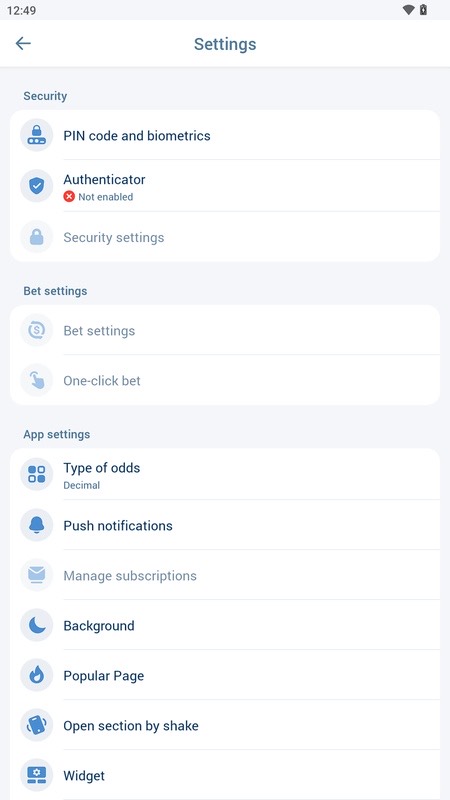
Real previews of the mobile interface: home, sports betting, Live, bet slip, casino and settings. Tap an image to enlarge it.
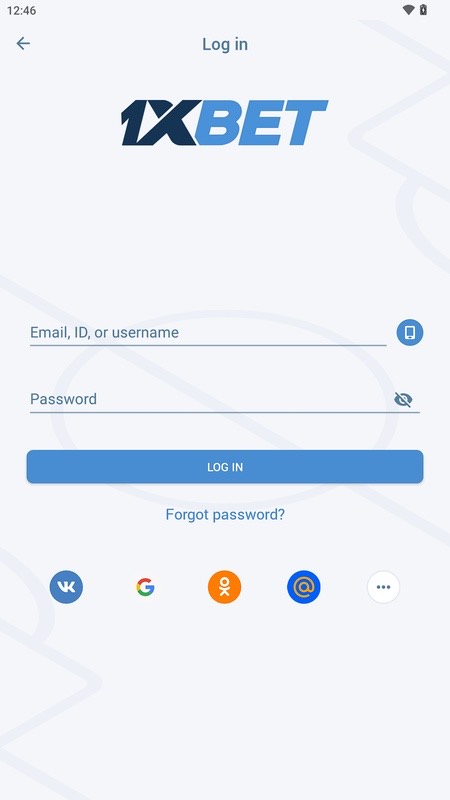
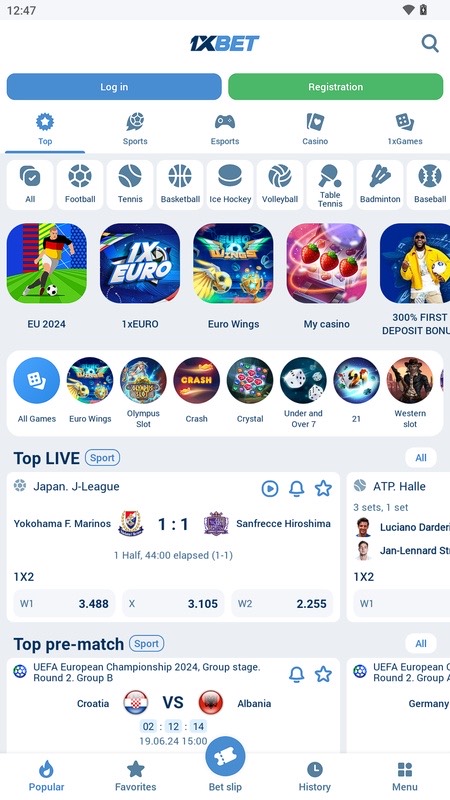
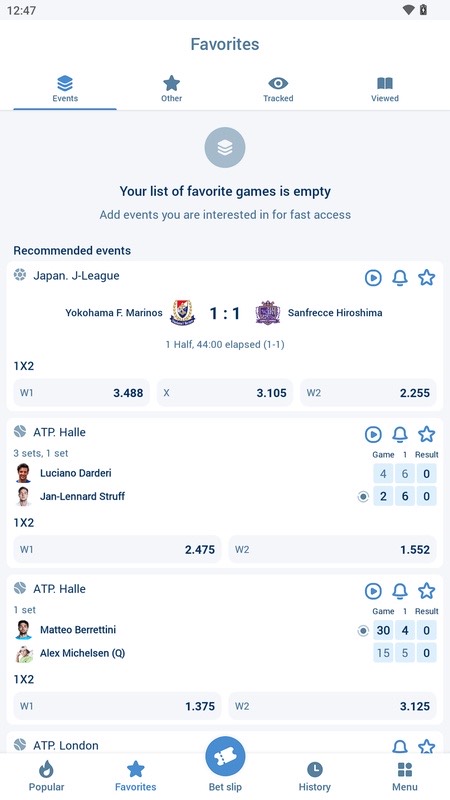
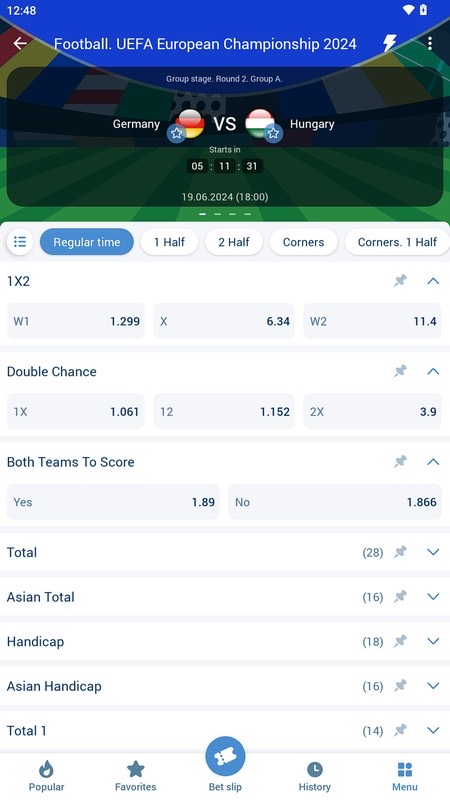
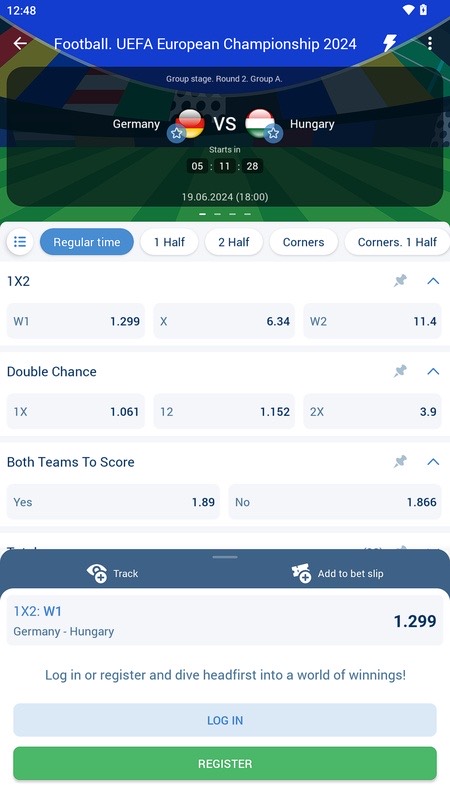
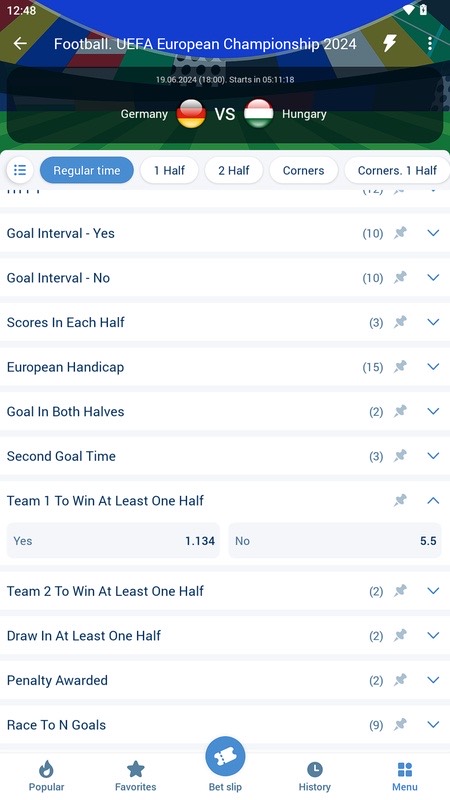
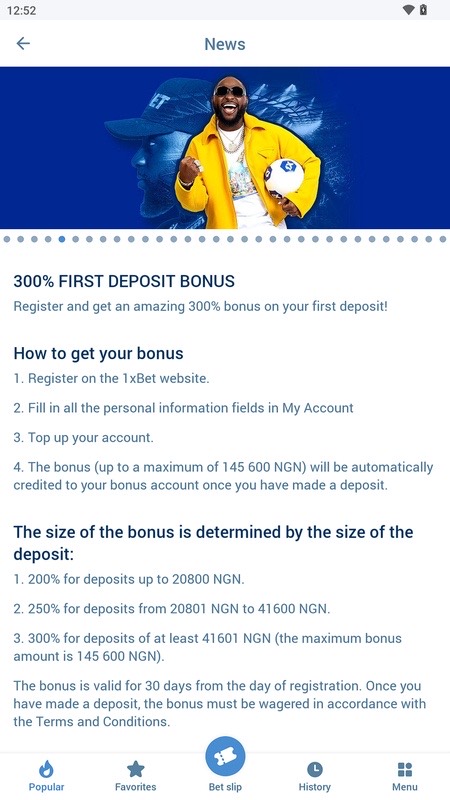
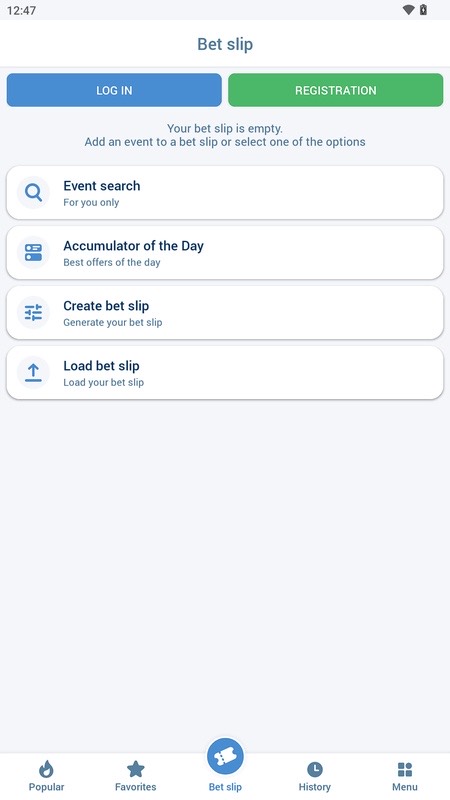
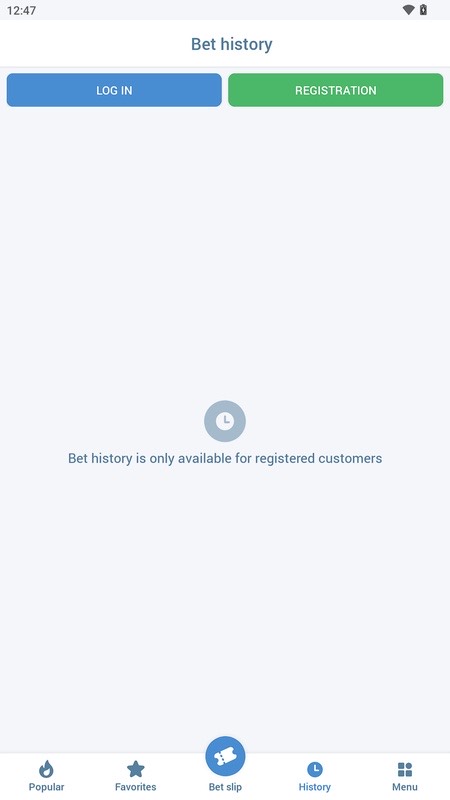
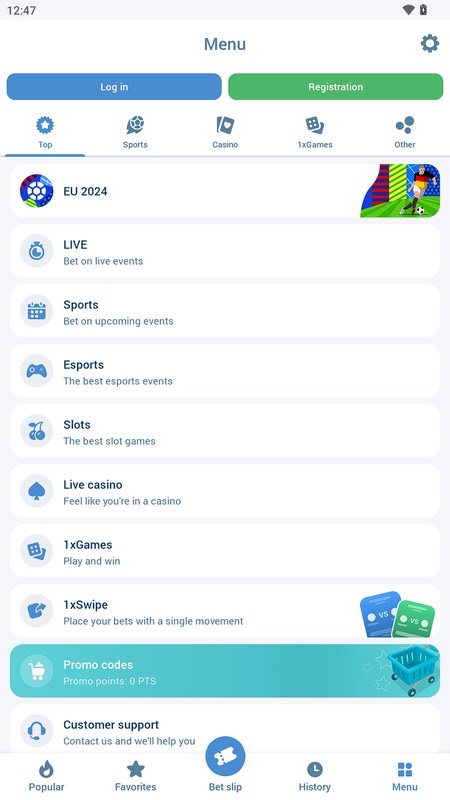
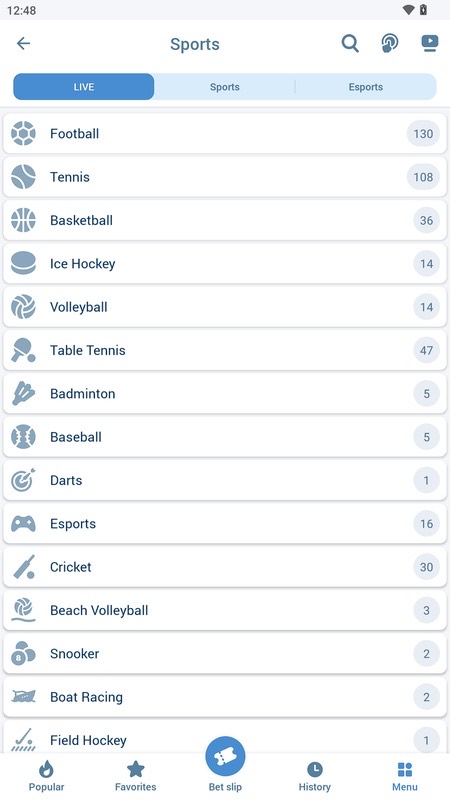
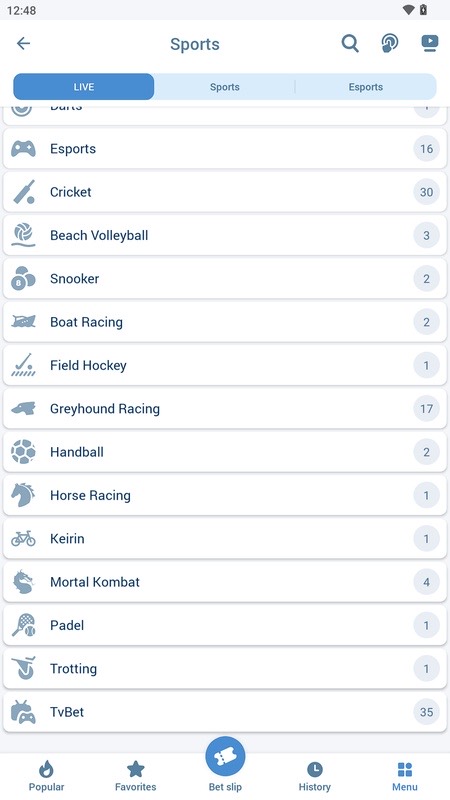
Account login (email, ID or username)Home: popular sports, casino and Top LiveFavourites: quick access to the events you followMatch markets: 1X2, double chance, BTTSMatch odds and adding to the bet slipDetailed list of a match's marketsBonus page: 200% on the first depositBet slip: search and bet of the dayBet history (registered accounts)Menu: Live, Sports, Esports, Slots, Live casinoLive sports with the number of eventsFull catalogue of available sportsPre-match events with 1X2 oddsBet slip generator: stake and target winningsSettings: security, PIN code, notifications
Scroll horizontally to see all 15 screenshots.
Installation
How to install the 1xBet APK
Android often blocks off-store installs by default. The permission should stay temporary: enable it to install, then turn it off once you no longer need it.
The installation should be done in one go from the complete file. If the phone shows an error, don't force several different files: delete the failed download and start again from the intended source.
Once opened, the 1xBet app shows live odds, match statistics, real-time results, single bets, accumulator bets and live bets.
1
Download the APK file from the intended page.
2
Open the file from your browser or the Downloads folder.
3
Temporarily allow this source if Android asks.
4
Install the app and open 1xBet.
5
Return to Android settings to remove the permission you no longer need.
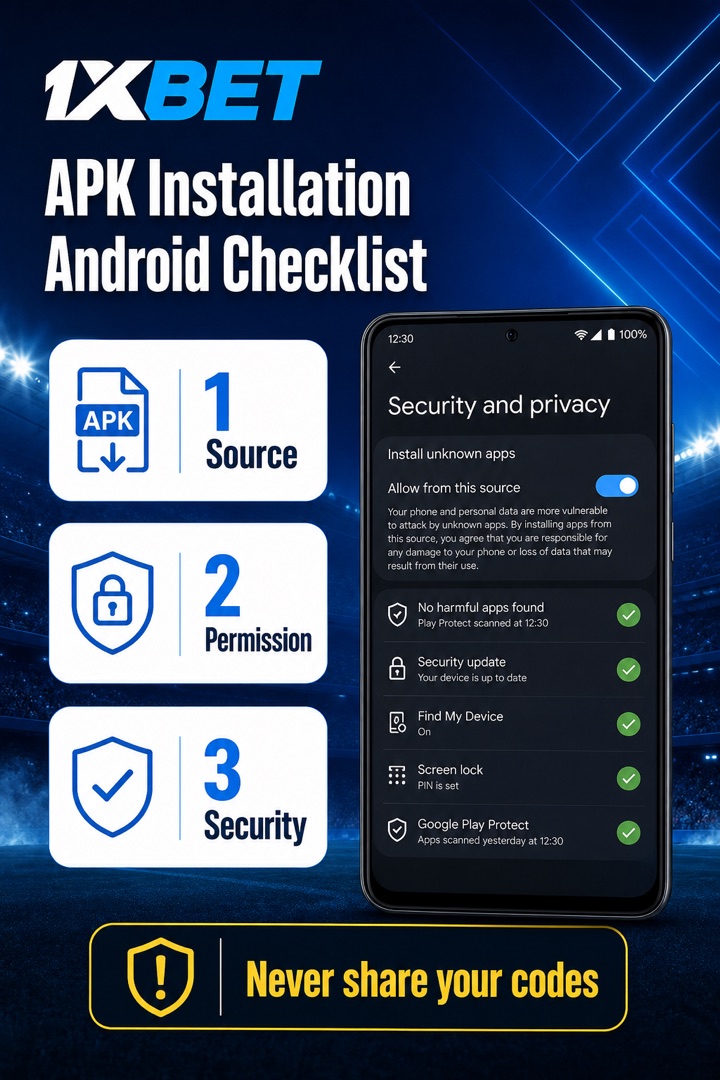
Checklist: APK installation, temporary permission and source verification.
Steps
How do I install the Android app?
Download the APK, allow unknown sources, install.
1
Tap "Download" to get started.
2
Open the "Install unknown apps" section in Settings.
A recent APK needs a stable phone, enough free space and a decent connection. The download page should stay clear about the file on offer and not mix up Android, iPhone and older versions.
Infographic: check the APK file, the source and Android compatibility before downloading.
Item
What to check
Why it matters
Android
Compatible system version
Prevents install blocks
Storage
Free space before downloading
Prevents incomplete files
Connection
Wi-Fi or a stable network
Reduces corrupt-file errors
Browser
Source allowed temporarily
Lets you install without opening up the whole device
Account
Login details available
Makes it easier to log in after an update
Security
Security before opening the app
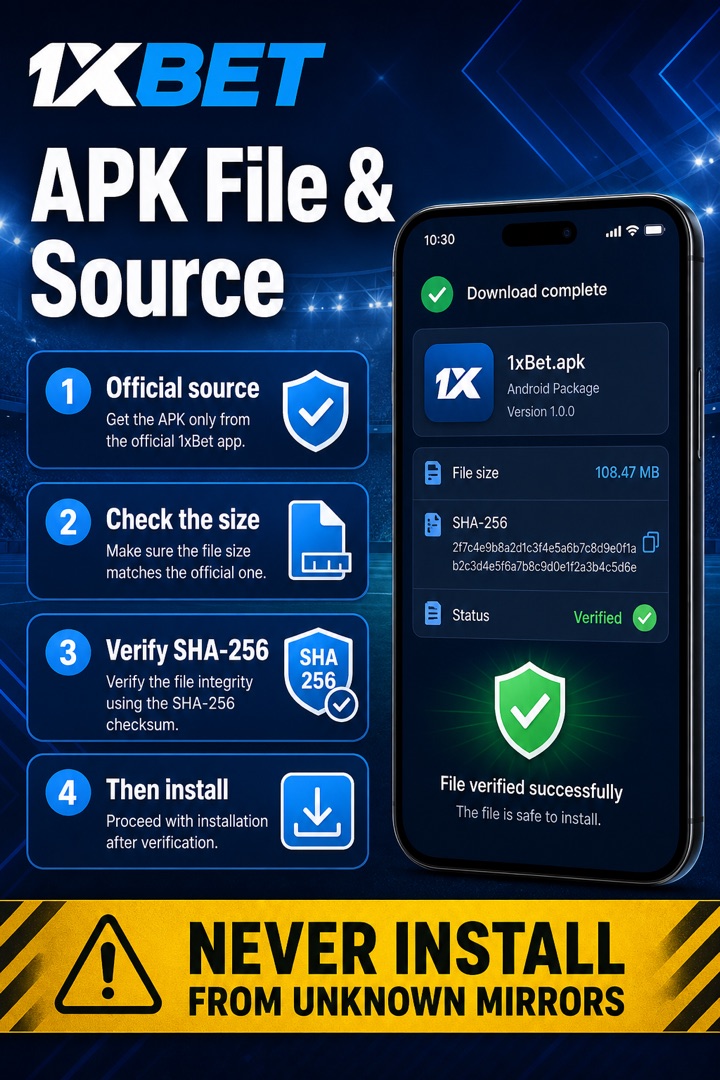
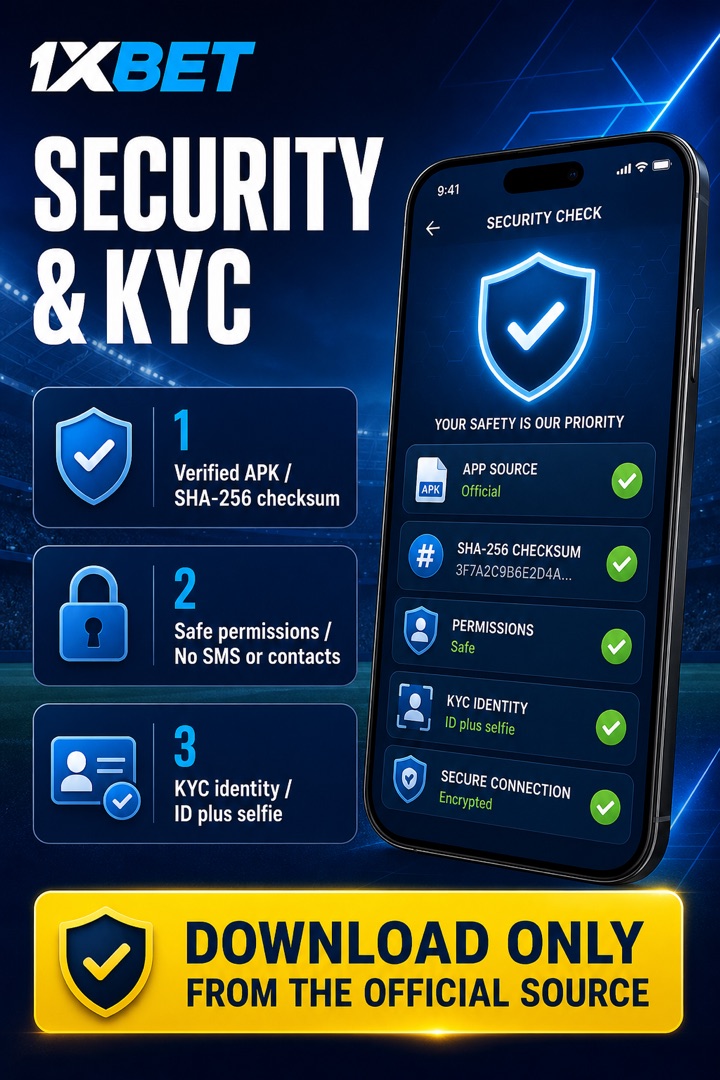
Is the APK safe to install?
Yes — as long as you download the file from the verified source on this page and check its fingerprint before installing. Here's what confirms it:
Scannable file — run the APK through Play Protect or an antivirus right before you install it.
Verifiable SHA-256 fingerprint — the signature published below (6a92…3768) must match your file exactly.
Publisher certificate O = 1xBet — the certificate signature identifies the app's official publisher.
Not on Google Play? That's normal: Google Play restricts real-money betting apps, which is why you install via an APK file.
Detailed SHA-256 verification procedure further down in this section. 18+ · responsible gambling.
Licence, country and fingerprint
Licence & operator
OperatorCaecus N.V. (Curaçao)
RegulatorCuraçao Gaming Control Board
Licence no.OGL/2024/1262/0493
App Store publisherVaries by region
Your country
Local verificationCheck your national gaming regulator before depositing
FrameworkLocal betting rules apply on top of the licence
Age required18+ · responsible gambling
Source to consultYour national regulator's official register
1xBet operates under a Curaçao licence (Curaçao Gaming Control Board). This licence governs the operator but does not replace the rules of your own country; any authorisation of the brand should be verified with your national gaming authority. The App Store publisher varies by region, separate from the gaming operator.
An APK shouldn't request permissions unrelated to its purpose: if an unusual Android alert appears, cancel the installation and check the source. Keep your browser and system up to date, never enter your password in an external window, and don't share confirmation codes.
Avoid mirrors, shortened links and VPNs used only to bypass the account's country. The wrong country can complicate KYC, the bonus, deposits and withdrawals. If your phone offers an antivirus scan or Play Protect, run it after the download and before installing.
Check the domain before downloading.
Avoid APKs sent by messaging.
Reject mirror sites and modified APKs.
Scan the file if Android or your antivirus offers to.
Review the Android permissions.
Use a unique password.
Enable session limits if available.
Verify the file's SHA-256 fingerprint
An authentic 1xbet.apk file always has the same fingerprint. Compare yours to this one:
Calculate the fingerprint of your downloaded file:
Windows : certutil -hashfile 1xbet.apk SHA256
Android (Termux) : sha256sum 1xbet.apk
macOS / Linux : shasum -a 256 1xbet.apk
If both fingerprints are identical, the file hasn't been altered. The certificate signature should also match O = 1xBet (MD5 fingerprint 354d6eaa8a6f489a18f54eaa3a7ce013). If the fingerprint differs, delete the file and download it again from the verified source.
Permissions
Android permissions: what to look at
The most important permission is the one that lets your browser install an app. It shouldn't stay open for all sources after installation.
If a request seems excessive, check it before continuing. Android settings let you revoke the browser's access, manage notifications and limit background activity.
Install measurement — can be limited in Android settings
List extracted on 16 June 2026 from the 1xbet.apk file actually on offer (AndroidManifest). SHA-256 checked: 1936c31823c9c48a0c854e79b09c77fdfb26f53672bc5b63f073ba3a0d773fb5. You can revoke most of these permissions after installation in Settings › Apps › 1xBet › Permissions.
Update
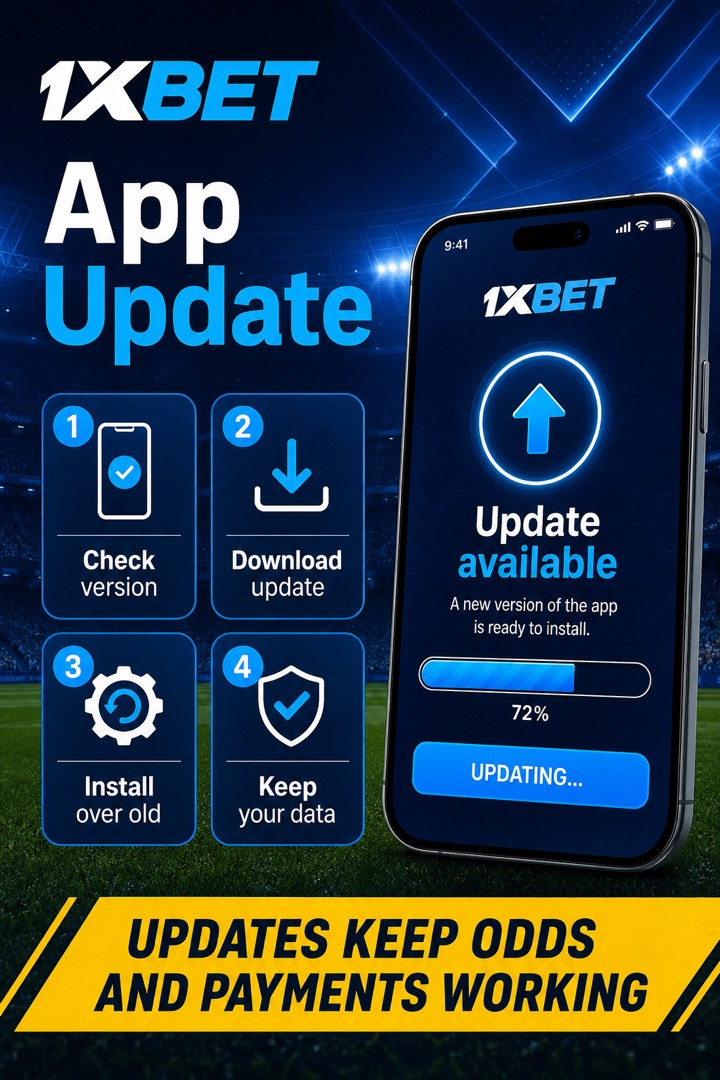
Update the APK
An older version may open more slowly, show fewer features or refuse certain actions. The update should replace the app without deleting your account information.
If the installation fails, check the free space, your Android version, the connection and whether an old, incomplete APK file is present.
Infographic: update the APK without losing access to your account.
Device choice
1xBet Android APK, iPhone or mobile site
The APK is for Android only. On iPhone, use the App Store if the app appears in your region, otherwise open the mobile site with Safari.
If you don't want to install a file, the mobile version of the site is still a simple option: login, markets, bet slip and account all stay accessible from the browser.
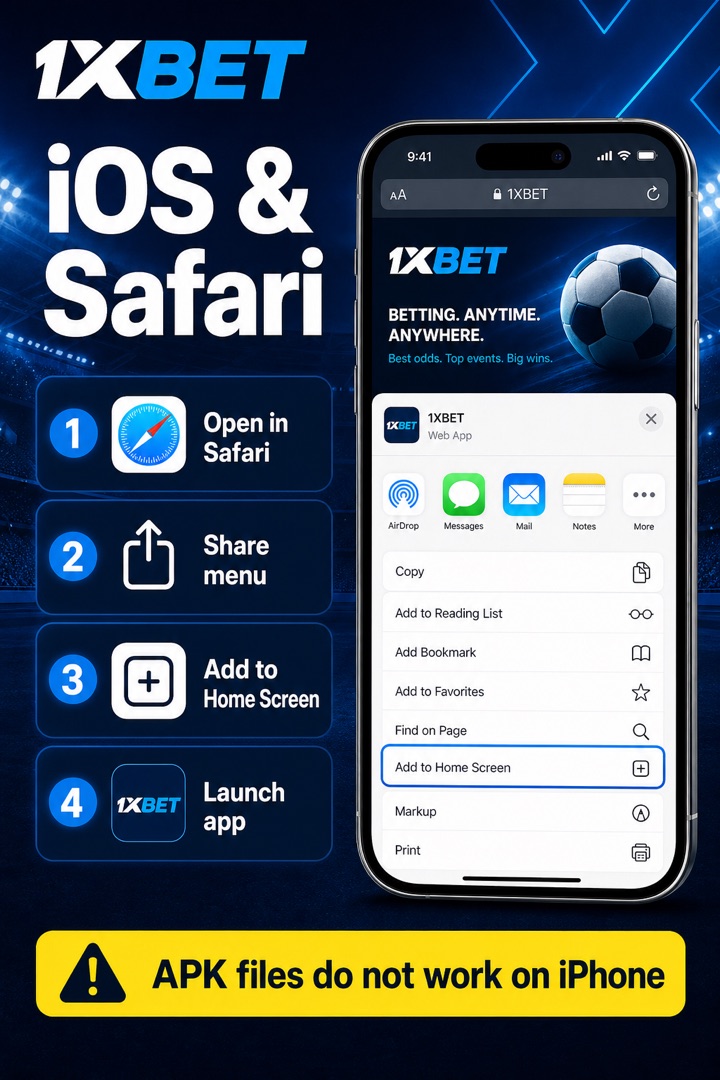
Infographic: understand why an iPhone uses the App Store or Safari, not an APK file.
Usage
Using the app after opening
After opening, check the connection, your balance, the security settings and the notifications. The features you see can change depending on the account, the app version and the rules shown in the interface.
Before depositing or placing a bet, re-read the bonus terms, the limits, the available payment methods and the withdrawal rules. A correctly installed app doesn't replace these checks.
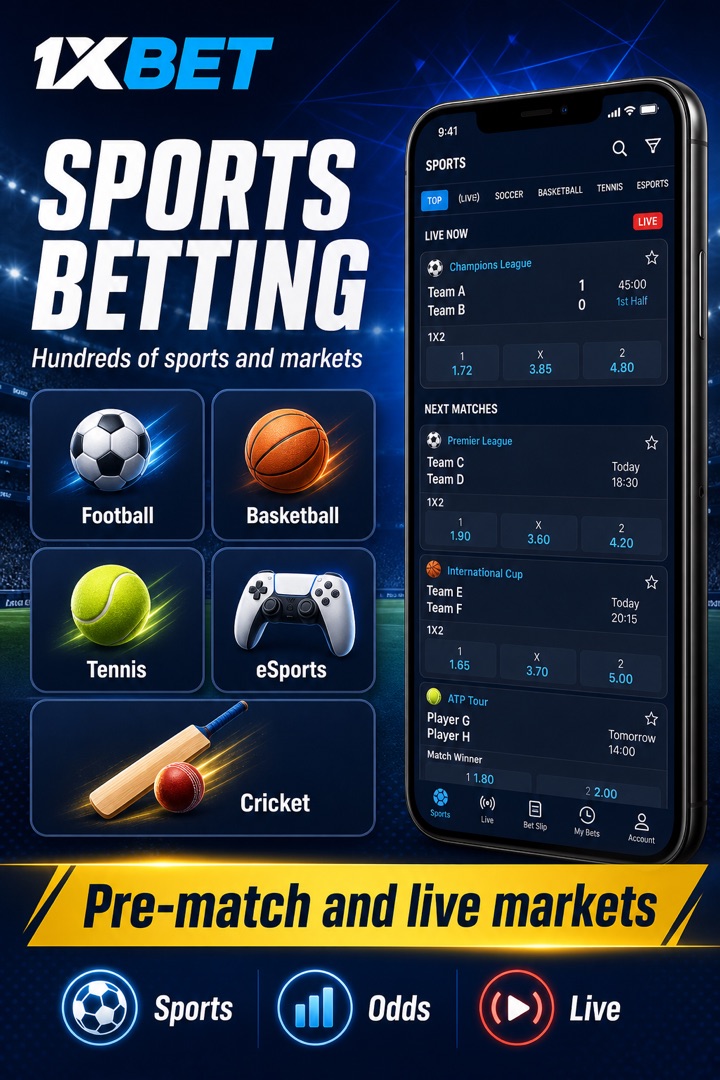
Infographic: track odds, statistics and results before confirming a live bet.
Troubleshooting
Common errors during installation
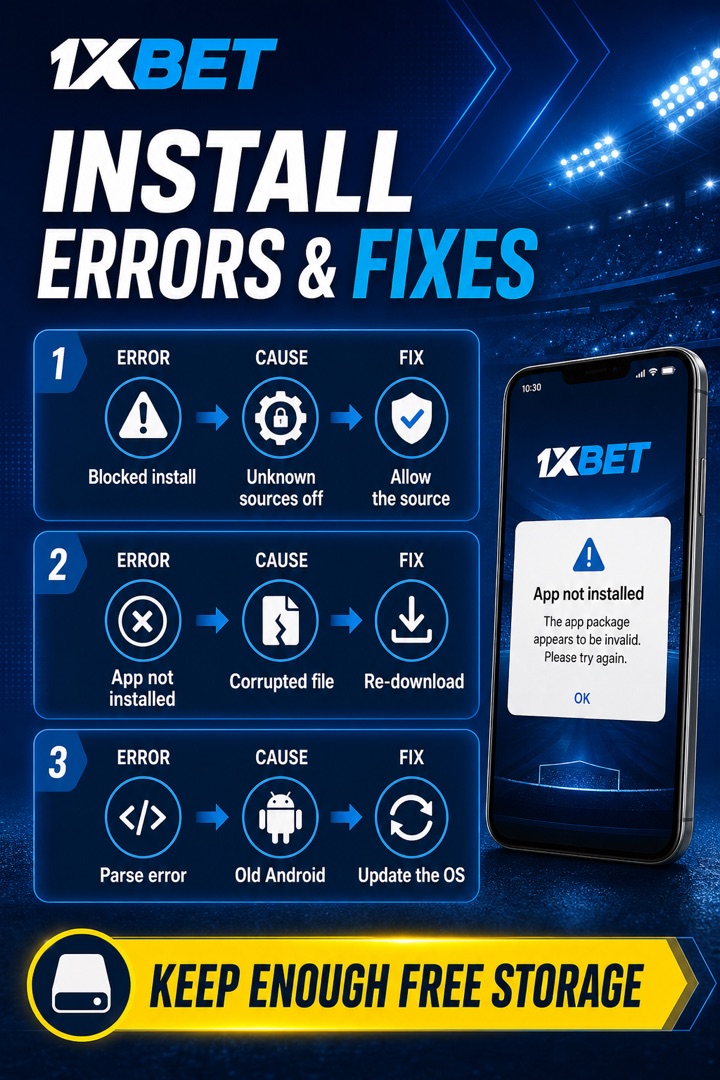
Errors often come from an incomplete file, a lack of space, a disabled Android permission or a system version that's too old.
Delete the partially downloaded file, restart your browser, check the available space, then start the download again from the same trusted source.
Infographic: fix common APK installation errors on Android.
After installation
After installation
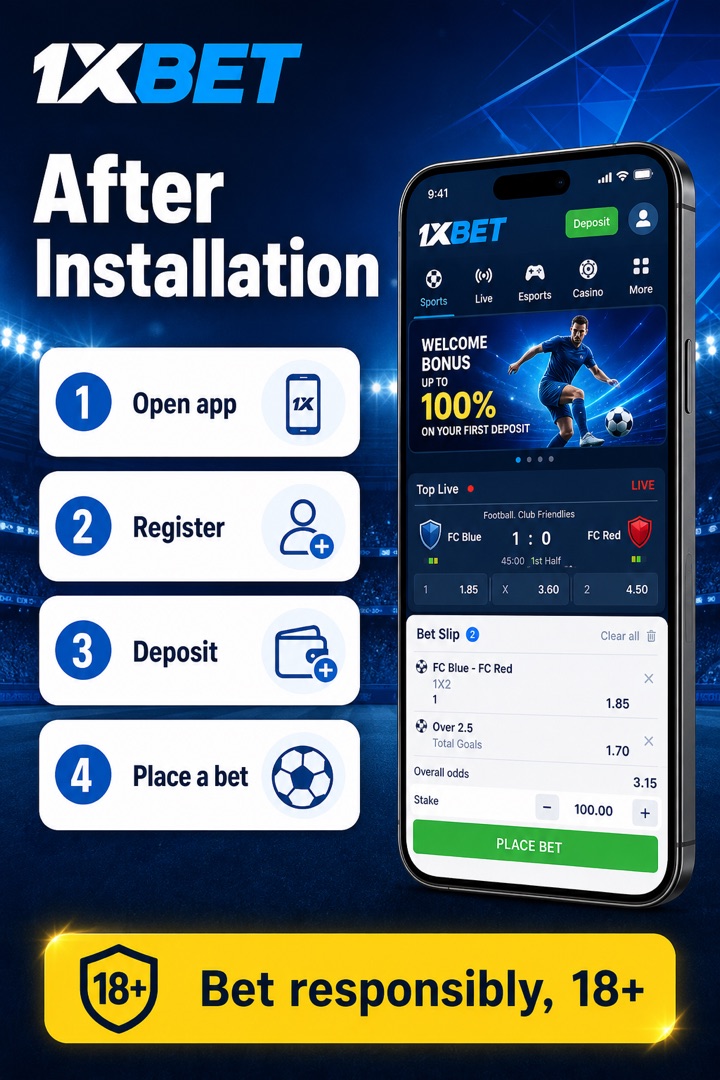
Open the app, log in or create an account, then check the security settings. Before any deposit, read the offer terms and set a budget.
The 1xBet app gives you access to your mobile account; it does not guarantee any winnings. Odds, bonuses and terms can change.
Checklist: open the app, secure the account and set a budget after installation.
Android
1xBet app for Android
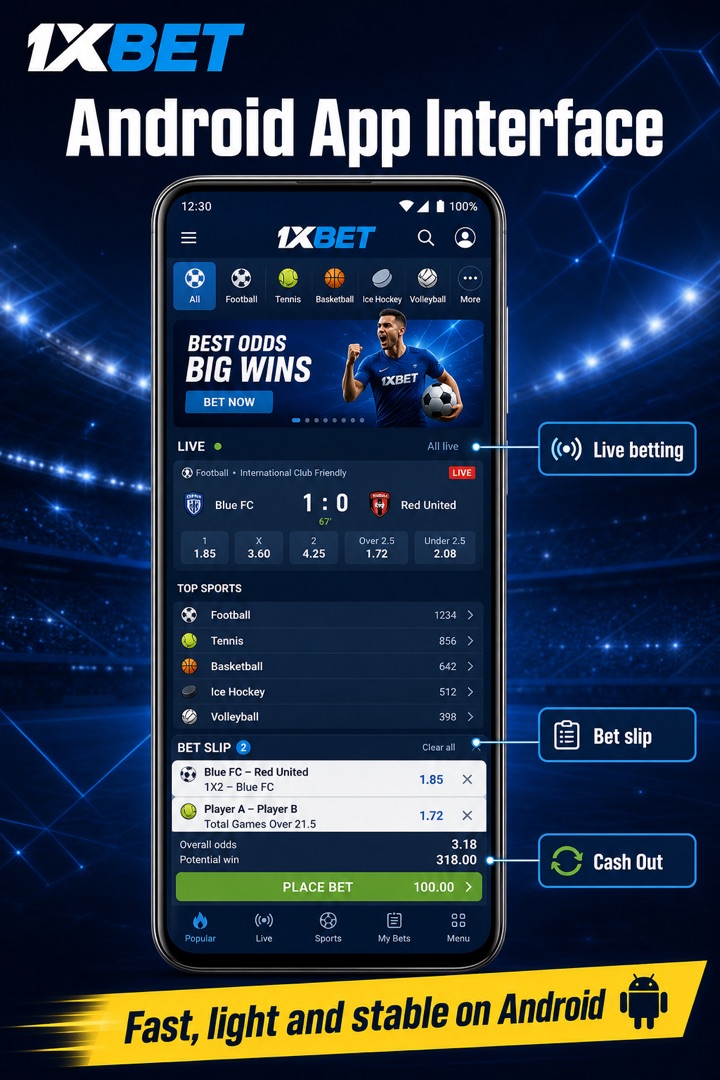
On Android, the 1xBet app gives you access to your account, sports betting, live, casino and slots from your phone. The key is to install the right APK file and verify the source before entering a password.
The interface is above all about moving fast: pick a sport, open a match, read the odds, build a bet slip and check your balance. Before confirming, always re-check the selection, the odds and the amount.
Infographic: understand the Android interface, sports, the bet slip and the balance.
You can add matches to your favourites, turn on useful notifications and follow the events you watch often. Keep only the alerts you need so you don't tap under pressure.
Depending on the events available, the app can show live coverage, scores, real-time results and match statistics. This information helps you read a bet, but it never guarantees the outcome.
For payments, check the method offered in your account, the account holder's name, the limits, the fees and the processing time. Keep proof after a deposit or a withdrawal request.
In short, the 1xBet app can be handy on Android, but it doesn't replace the checks: file source, displayed terms, budget, account security and the rules that apply in your country.
Instant games
Crash games in the app
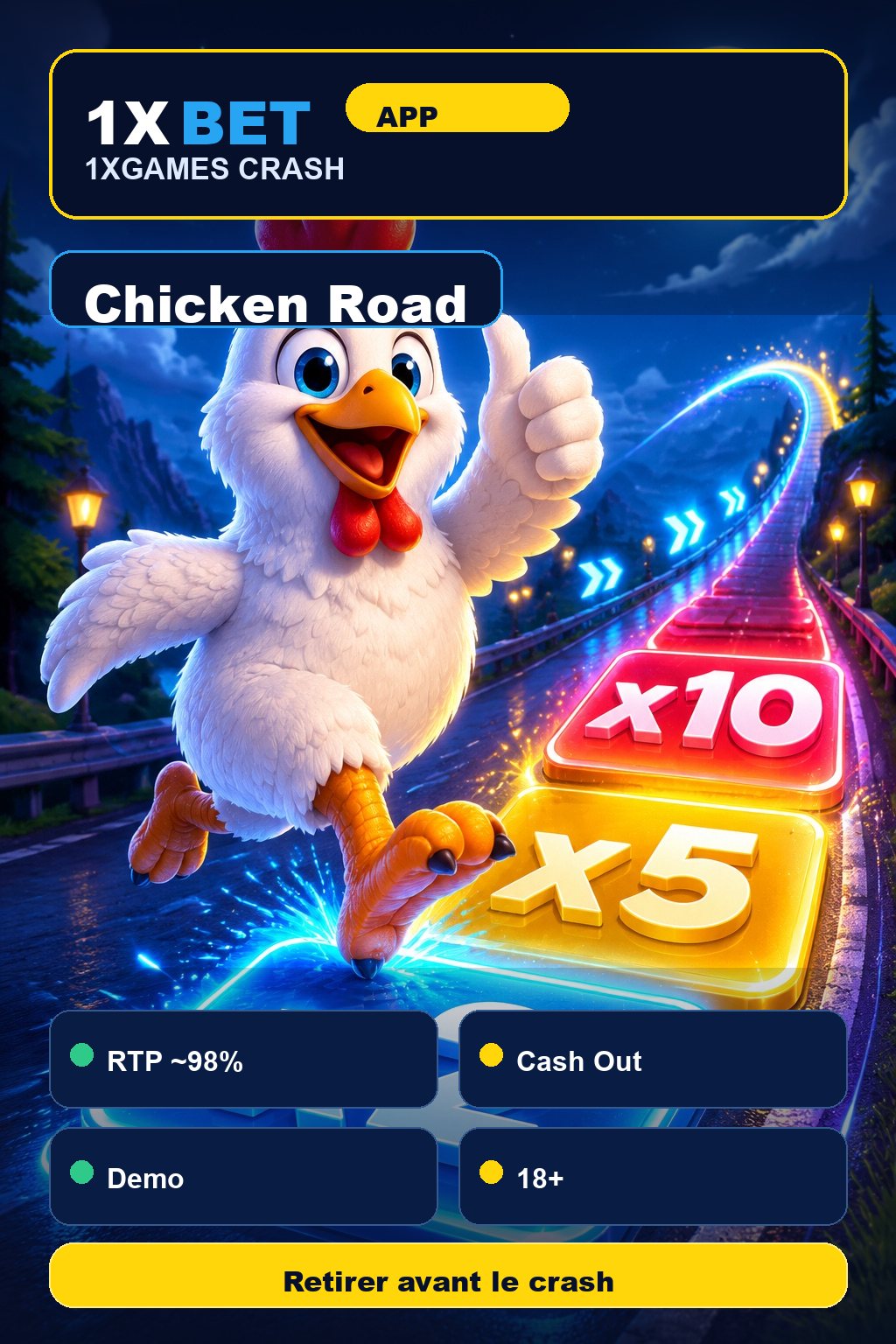
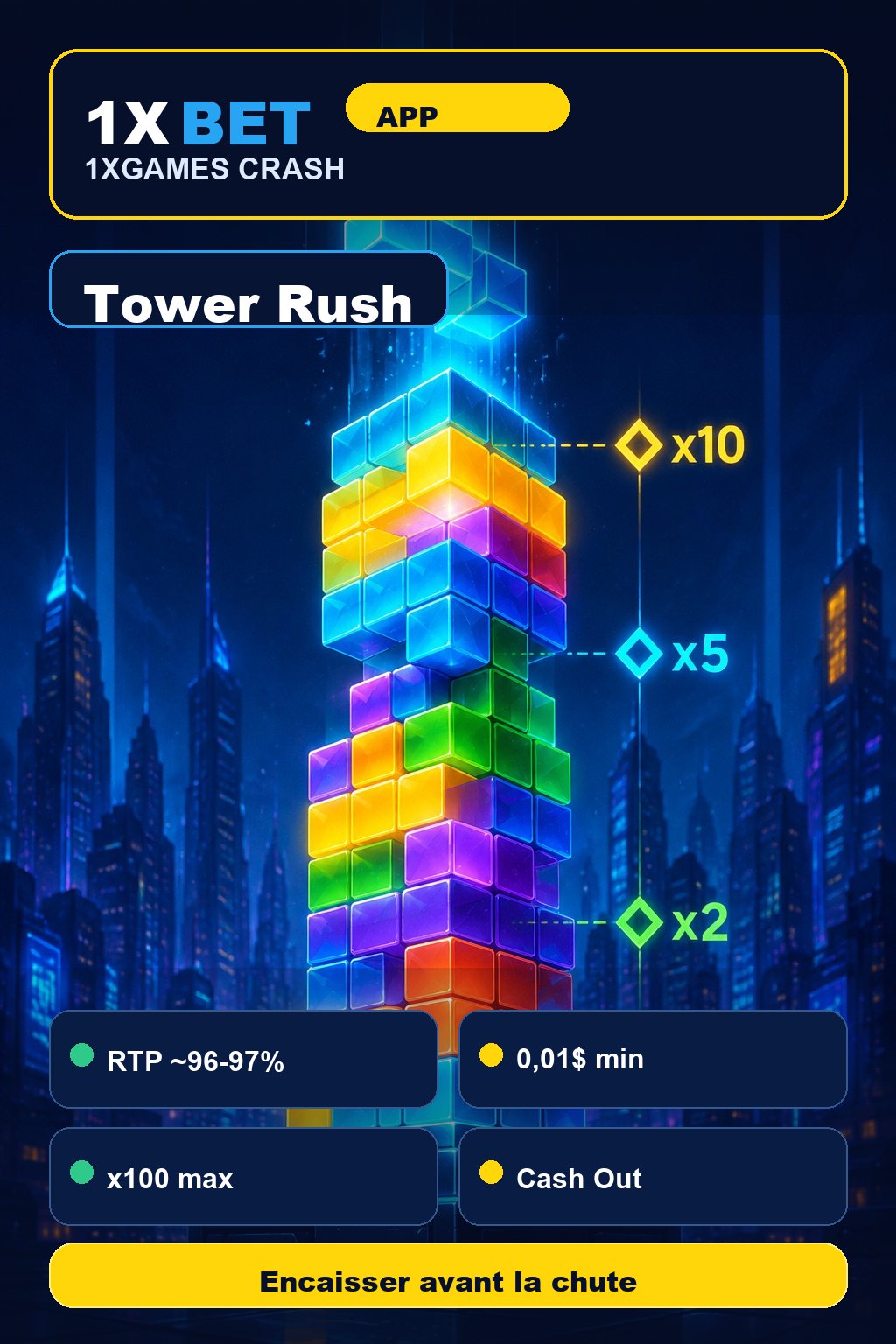
Beyond sports betting, the app gives you access to crash and instant games (casino / 1xGames). The idea is always the same: you place a bet, a multiplier rises, and you have to cash out before the round ends. Availability, RTP and limits depend on the country, the account and the app version.
Chicken Road: the chicken moves square by square, the multiplier climbs — cash out before the crash.Tower Rush: each added floor raises the multiplier — cash out before the tower falls.
Game
Provider
How it works
Indicative RTP
What to check in the game
Chicken Road
InOut Games
A chicken crosses a road; each square cleared raises the multiplier
~98%
Min/max stake, Cash Out, demo mode
Chicken Road 2
InOut Games
Sequel to Chicken Road, same mechanics with new levels
~98%
Level and payout differences, availability by country
Tower Rush
Galaxsys
You stack floors; the multiplier rises until the tower falls
~96–97%
Stake from $0.01, max win ~×100, bonus floors
Aviator, Chicken Crash
Spribe, Galaxsys
Curve multiplier (plane) or chicken; cash out before the crash
~97–98%
Auto Cash Out, double stake, round statistics
Crash games are games of chance with a fast outcome. RTP values are indicative and can vary by version and country; check them in the game. Try the demo mode if it's offered, set a budget and play responsibly (18+). A high multiplier never guarantees a win.
Verdict
1xBet pros and cons
Our editorial summary after testing the 1xBet APK app. Updated 1 July 2026.
Pros
Fast APK install, verified file (SHA-256)
Full live betting and cash-out
Local deposits (bKash, Nagad, UPI, GCash, M-Pesa)
Cons
Off Play Store: you must enable unknown sources
KYC verification required before withdrawal
Casino
Games & slots
Popular slots, table games, live casino and crash — from the best providers, right inside the app.
Live dealers in HD: roulette, blackjack, baccarat and TV games like Crazy Time.
Live roulette
Blackjack
Baccarat
Live poker
TV games (Crazy Time)
Game shows
Virtual
Virtual sports and demo mode
Matches and races generated around the clock, results in a few minutes — football, horses, tennis and more.
Virtual football
Horse racing
Greyhounds
Virtual tennis
Cycling
Virtual basketball
Free
Demo mode
Try most slots for free (play for fun) before betting real money.
Cashier
Deposits, withdrawals & cashier limits
Local methods and indicative processing times. Exact amounts depend on your country and are confirmed at the cashier.
Method
Min. deposit
Min. withdrawal
Processing time
bKash / Nagad (BDT)
~100 BDT
~500 BDT
Instant – 30 min
UPI / Paytm (INR)
~100 INR
~300 INR
Instant – 30 min
GCash / Maya (PHP)
~50 PHP
~150 PHP
Instant – 60 min
M-Pesa / Paystack (KES / NGN)
~50 KES
~200 KES
Instant – < 1 h
Card (Visa / Mastercard)
~$1
depends on bank
1 – 3 days
Cryptocurrencies (BTC, USDT)
approx. ~$1
approx. ~$1.5
A few minutes
Indicative values: 0% fee on the 1xBet side (mobile-network fees may apply). The amount shown at the cashier is what counts — check it for your country and currency.
Security
1xBet account verification (KYC)
Required by regulation (anti-money-laundering + 18+ age check), verification is mandatory before your first withdrawal.
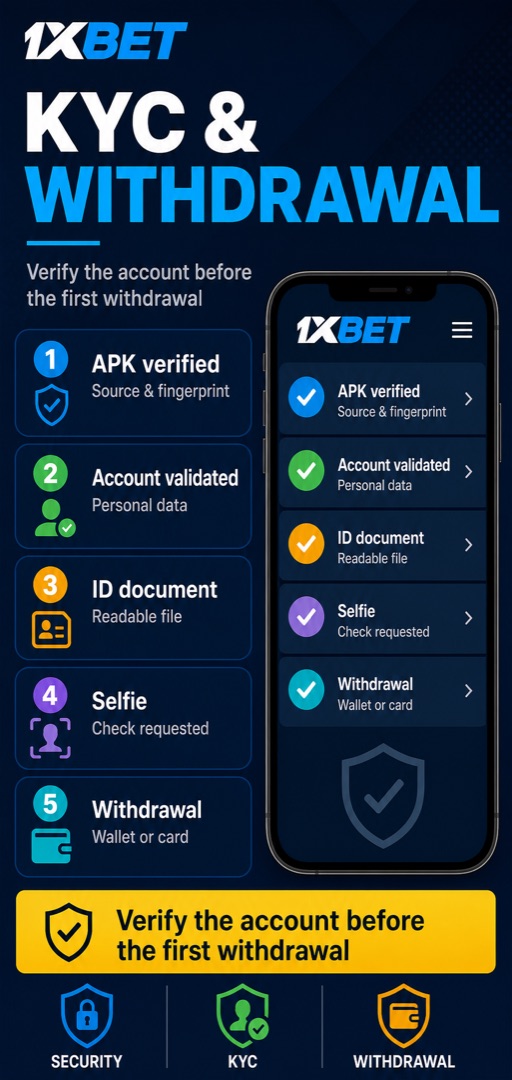
The security journey: verify the file (SHA-256), validate the account (KYC), then unlock withdrawals.
1
Complete your profile with your real details (name, date of birth, country).
2
Upload a valid colour ID document (national ID card or passport).
3
Take a selfie holding your document if 1xBet asks for it.
4
Account verified: you can withdraw your winnings.
Documents and verification times
Accepted documents
IdentityNational ID, passport or driving licence
Proof of addressBill / statement < 3 months old
FormatColour, sharp, ≥ 300 dpi, JPEG/PDF
SelfieWith the document, if requested
Times & tips
Approval≈ 72 h
FastestOn weekdays (business days)
Name / dateExactly as on your ID
Required forAny withdrawal of winnings
Loyalty
1xBet VIP & loyalty programme
The 1xBet VIP programme awards points for real-money casino bets (~100 points per $1 wagered). A higher level increases the cashback rate shown in your account.
The VIP programme has 8 levels: Copper, Bronze, Silver, Gold, Ruby, Sapphire, Diamond, then VIP. The Diamond level shows up to 11% cashback in the programme. The VIP level applies its own rules only if the offer is visible in your account.
The 1xBet app shows the activation under Promo → VIP Cashback → Join. The player should check the rate, the payout frequency and the terms shown before betting to earn points.
Trending
Popular right now
Aviator Champions League Gates of Olympus Premier League Crazy Time Sweet Bonanza Live football Lucky Jet Live roulette Plinko 2026 World Cup Big Bass Bonanza Aviator Champions League Gates of Olympus Premier League Crazy Time Sweet Bonanza Live football Lucky Jet Live roulette Plinko 2026 World Cup Big Bass Bonanza
Always check the version, the size (44.9 MB) and the SHA-256 fingerprint before opening the 1xbet.apk file.
The leosproduce.com team verified the file on 1 July 2026. The 1xbet.apk file served by this page weighs 47,119,379 bytes (44.9 MB) and has the SHA-256 1936c31823c9c48a0c854e79b09c77fdfb26f53672bc5b63f073ba3a0d773fb5. Your 1xBet account shows the bonuses, limits, country availability, KYC steps and support channels that apply to your profile.
Method
1xBet tested by our editorial team
Every version is downloaded, verified and installed by hand before publishing — here are our real measurements.
Checked on 1 July 2026: the current version, file size and SHA-256 fingerprint come from the APK served on this page. The notes for previous versions are editorial reference points. The versions we archive (from prod-v257.0.74 onward) can be downloaded as-is via the official source; for earlier, un-hosted versions the button provides the latest verified version. All files come solely from the official source.
1xBet APK1xBet APK uses the Android APK format. The file is called 1xbet.apk.
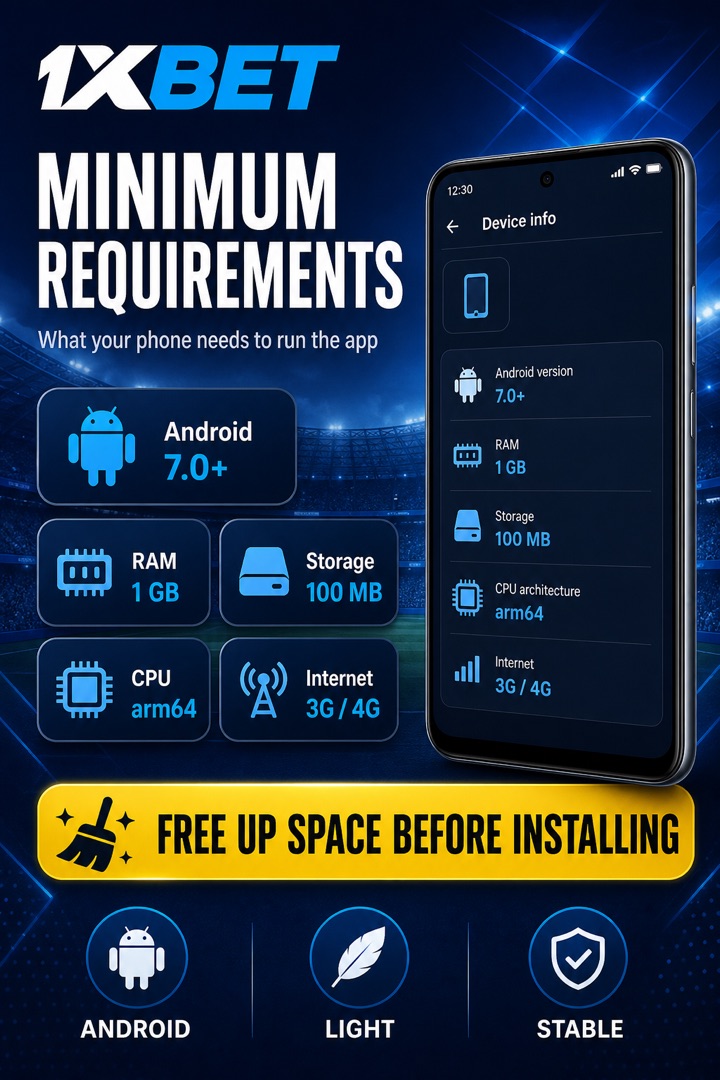
Android1xBet APK requires Android 7.0 or higher. The expected package is org.xbet.client1.
SecurityThe APK file is verified with SHA-256. A modified APK raises the risk of account theft.
iPhoneiPhone doesn't install APK files. iPhone uses the App Store or Safari.
Currency1xBet shows your local currency, such as BDT, INR, PHP, NGN, KES, ZAR, MYR or SGD.
Mobile paymentWallets such as bKash, UPI, GCash or M-Pesa link your 1xBet account to your local number. Withdrawal depends on KYC.
KYCKYC checks your national ID, passport, selfie and proof of address. Incomplete KYC can block a withdrawal.
BonusA bonus depends on the country, the currency, the minimum deposit and the wagering.
Target markets
Download 1xBet in your country
The 1xBet app appeals above all to mobile users who want to access sports betting, the casino, live odds and their account from Android or iPhone.
The 1xBet download often concerns markets such as Bangladesh, India, the Philippines, Pakistan, Nigeria, Kenya, Malaysia, Ethiopia, Zambia, Nepal, Ghana, Uganda, Tanzania, Somalia and South Africa.
Coverage also extends to English-speaking markets such as Canada and Singapore, depending on local availability of the app and payment methods.
Each country may show different payment methods, currencies, bonuses and verification methods. Before downloading, check the file source, the account country, the displayed currency and the terms visible in the app.
Country
Currency
Payments to look for
KYC and withdrawal
APK / iOS
Bangladesh
BDT
bKash, Nagad, Rocket, card
National ID, selfie, payment proof, same account holder
Android APK, App Store if available, mobile site
India
INR
UPI, Paytm, PhonePe, bank card
ID, transaction receipt, withdrawal time
Android APK, iPhone via App Store or Safari
Philippines
PHP
GCash, Maya, card
Verified account, matching name, operator limits
Android APK 7.0+, mobile site if the Play Store is missing
Pakistan
PKR
JazzCash, Easypaisa, card
Readable document, proof of deposit, bonus check
Android APK, iOS depending on regional availability
Nigeria
NGN
Paystack, OPay, bank transfer, card
National ID or passport, proof of address if requested
Android APK, mobile site on a slow connection
Kenya
KES
M-Pesa, card
SMS/OTP, operator receipt, withdrawal limits
Android APK, official source only
Malaysia
MYR
Touch 'n Go, GrabPay, FPX, card
Number in the same name, supporting document if withdrawal is blocked
Android APK, Safari/mobile site on iPhone
Nepal
NPR
eSewa, Khalti, card
KYC before withdrawal, operator fees and processing time
Android APK, a lightweight app recommended
Ethiopia, Somalia
ETB, SOS
telebirr, EVC Plus, Zaad, card
Phone verification, proof of payment, currency
Android APK, mobile site if the app is unavailable
Ghana, Uganda, Zambia
GHS, UGX, ZMW
MTN MoMo, Airtel Money, Telecel Cash, card
National ID/passport, matching account holder, withdrawal time
Android APK, iOS depending on region
Tanzania
TZS
M-Pesa, Tigo Pesa, Airtel Money, card
Verified account, valid document, local caps
Android APK, mobile browser if needed
South Africa
ZAR
Cards, EFT, bank transfer
Displayed currency, account country, proof of address
Methods, currencies and bonuses are not the same in every country. Use this matrix as a checklist before downloading, depositing or withdrawing, then always confirm at the 1xBet cashier shown in your account.
Mobile access
Android uses the APK file. iPhone uses the App Store if the app is available, otherwise Safari and the mobile site remain the simple option.
Local payments
bKash, Nagad, UPI, GCash, JazzCash, M-Pesa, Paystack, Airtel Money, cards and crypto may appear depending on the country and account.
Local bonus
A promo code depends on the country, the currency, the minimum deposit and the terms shown in the interface.
Local entities
1xBet checklist: payment, bonus, KYC and device
Mobile infographic: countries, currencies, local payments, bonus and withdrawal.
Mobile infographic: safe APK, KYC, Android devices and live betting.
RegionsSouth Asia, West Africa, East Africa, Southeast Asia, English-speaking markets, diaspora.
CitiesDhaka, Mumbai, Manila, Karachi, Lagos, Nairobi, Kuala Lumpur, Accra, Kampala, Dar es Salaam.
Promo code, one account per person, cancellation if terms are not met
Kenya, Ghana, Uganda, Tanzania
Bonus in KES/GHS/UGX/TZS, mobile deposit, withdrawal after verification
M-Pesa/MTN/Airtel, account holder name, KYC before withdrawal
Philippines, Malaysia, Singapore
Bonus in PHP/MYR/SGD depending on account availability
Currency, maximum amount, proof of deposit, validation time
Other competitor pages
Freebet, cashback, VIP points, 230%, higher caps or multi-deposit offers
Treat them as valid only if the offer appears in the account and states its rules
Offers to check case by case
No-deposit bonus, free bet, promotional Cash Out or VIP points
Rarely available depending on country, short validity, rollover, minimum odds and a single account
Structure of a 1xBet welcome bonus — the exact figures depend on the country and the version, read them in your account before depositing:
Parameter
Value to confirm in the account
Bonus percentage
200% on the 1st deposit in Bangladesh
Bonus cap
12,000 BDT
Minimum deposit
120 BDT
Wagering requirements
x12 in an accumulator, at least 3 events, minimum odds 2.10 per event
Validity
30 days after activating the offer
Wagering / rollover
rollover_xN (number of times to wager before withdrawal)
Minimum odds per bet
min_odds_per_selection
Offer validity
validity_in_days after activation
Eligible markets
sports / odds / bet types eligible_per_rules
A bonus is only validated if the rollover is met within the deadline, at the minimum odds and with a single account per person. A bonus never guarantees a win.
KYC, APK security and withdrawal
KYC documentsNational ID, passport, driving licence, selfie, selfie video, proof of address, utility bill, bank statement.
Payment proofbKash/Nagad receipt, UPI reference, GCash, M-Pesa, card statement, wallet screenshot, active mobile number.
Safe APKOfficial source, no mirror, no forced VPN, no mod, no hack, SHA-256, antivirus scan, Android package, temporary unknown-sources permission.
WithdrawalMatching name, verified account, withdrawal blocked if KYC is incomplete, 24-48h processing depending on the method.
Secure accessSSL/encryption, 2FA if offered, Face ID or Touch ID on iOS, 24/7 customer support if shown.
QR codeSome guides offer a QR code. Scan it only from an official page or a controlled source.
Support ticketIf a deposit is not credited, an OTP is not received or KYC is rejected, keep the transaction ID, receipt and proof of transaction.
Help centreThe 24/7 support, live chat or help centre may ask for the number, date, currency and method used.
Responsible gamblingDeposit limits, session limits, account pause, self-exclusion and a personal budget if these settings are available.
Sports and local mobile use
What the app lets you follow on mobile across the target markets.
Across these markets, users often look for a lightweight app to follow cricket (including the IPL and World Cups), football, the Premier League and UEFA competitions, local domestic leagues, live odds, live streaming and match notifications.
Competitors also cover e-sports, cyber-sport, 1xGames, Aviator, crash, poker, lotteries, slots and live casino. These sections may exist in the app depending on the country, but they remain subject to the account rules and responsible gambling.
Cash Out, detailed statistics, the bet slip and personalised notifications should be checked in the interface before betting. A feature shown on a competitor page is not always active for every country or every event.
On an unstable 3G/4G network or an entry-level Tecno, Infinix, Itel, Samsung or Xiaomi phone, check the free space, clear the cache if the app slows down, enable dark mode if the app offers it and keep a proof of deposit before requesting a withdrawal.
If a competitor page mentions Android 5.0 or 5.1, treat that information as specific to its version. For the file shown here, check Android 7.0+ compatibility before installing.
According to 1xBet's official legal notice, the brand's games are operated by Caecus N.V. (company registered under no. 163779, Chuchubiweg 17, Curaçao), under licence OGL/2024/1262/0493 issued by the Curaçao Gaming Control Board (Curaçao regulator; licence in force since 7 November 2024). This licence governs the operator but does not replace the local rules of the user's country: always check the legality of betting in your jurisdiction and the legal age (18+) before playing.
Source
Where to download the 1xBet app?
Download the app from a clear page, with a visible button and installation instructions. Avoid APK files sent by messaging, in a group or via a shortened link.
On the Google Play Store, the availability of 1xBet can change. If you don't see the app in the store, don't look for a random copy: use a controlled source and check the file before installing.
Before continuing, look at the simple details: file name 1xbet.apk, Android APK format, version, size, update date, source and requested permissions.
If the downloaded file has a strange name, requests unrelated permissions or comes from an unknown page, cancel the installation and start again from the intended source.
Beware of fake files. Fake versions of 1xbet.apk circulate on Apkpure, Uptodown, Softonic, Malavida and in Telegram and WhatsApp groups. Some are modified APKs ("hack", "mod") that can steal your credentials or your payment information, or block a withdrawal. Download only from the verified source, then check the size (44.9 MB), the SHA-256 fingerprint and the certificate signature (O = 1xBet) before opening the file.
Steps
How to install the 1xBet app?
After downloading, open the APK file from the Downloads folder or from the browser notification. Android may ask for a special permission because the file does not come from a store.
Only allow the source used for this installation. After installing, open the app, check the account, then remove the permission if it is no longer needed.
Download the 1xbet.apk file.
Open the file in Downloads.
Temporarily allow the browser or the file manager.
Tap Install.
Open 1xBet and check that the login screen is normal.
Remove the permission to install outside the store if you no longer need it.
Requirements
Minimum requirements for downloading
The minimum phone configuration to install and run the APK.
Before downloading the 1xBet APK, check the simple file information: version, size, update date, source, free space and Android version. These details avoid incomplete files, old versions and installation errors.
If your phone is short on space, if the connection drops or if Android is too old, the installation may fail. In that case, delete the incomplete file and start over cleanly.
Requirement
Value
Operating system
Android 7.0 or newer
File format
Android APK
File name
1xbet.apk
Version
To be checked on the download page
Update date
To be checked before installation
Architecture
arm64 or compatible depending on the phone
Source
Official page or controlled source
RAM
1 GB minimum
Free storage space
100 MB minimum
Internet connection
Stable connection (Wi-Fi recommended for an optimal experience)
Screen resolution
320x480 pixels minimum
Permissions
Temporary permission to install from the browser
Updates
Install the latest version of the 1xBet app to access the latest improvements and features
iOS
1xBet iOS app
On iPhone, the APK file does not install: here are the three ways to access it.
App Store listing (iOS)
Data varies by regional App Store listing — open the App Store in your country to confirm the current publisher, size and version (separate from the Android APK file above).
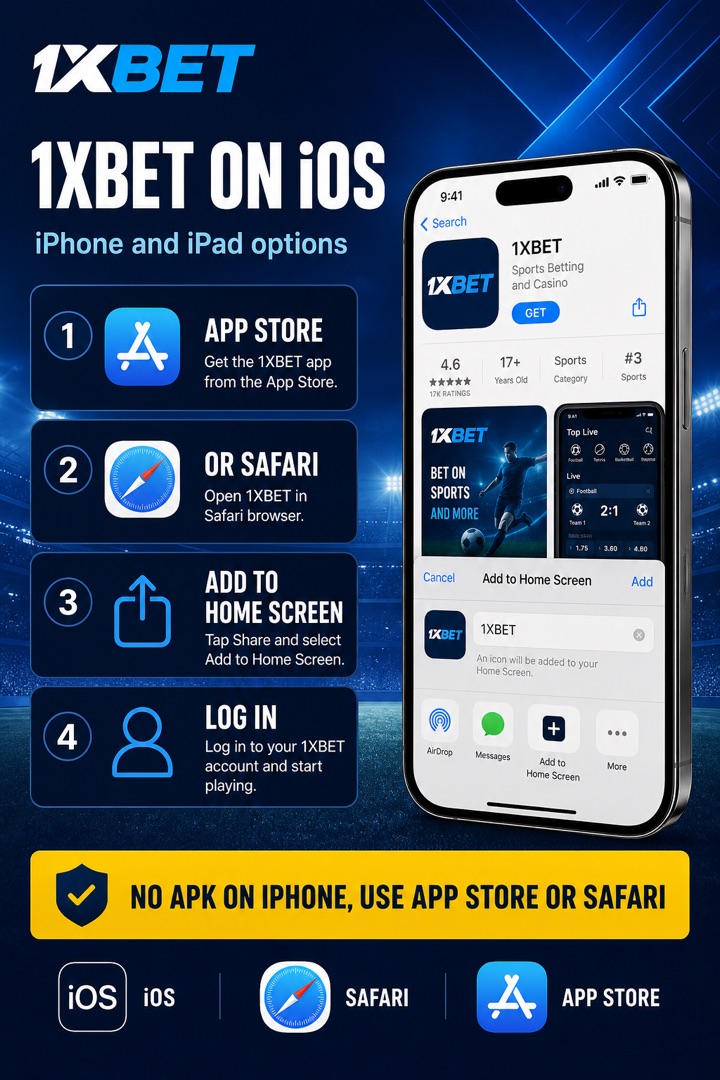
On iPhone or iPad, do not install an APK file. The APK format is for Android only.
If the 1xBet app appears in the App Store in your region, use the official listing and check the publisher before downloading.
If the app does not appear, use Safari and open the mobile site. You can then log in, view the odds, follow the live action, open the casino if the section is available and manage the account from the browser.
Before entering a password on iPhone, check the page address. Do not use an app or a profile installed from an unknown link.
How to proceed on iPhone?
On iOS, start with the App Store. If 1xBet is not available, use Safari instead of looking for an iPhone APK.
After opening it, log in only if the address and the app look normal to you.
The App Store or Safari are the simplest options to avoid fake files on iPhone.
Launch the App Store on your iOS device by looking for the blue icon marked with the "App Store" logo on your main screen.
Once in the App Store, select the "Search" tab at the bottom.
Enter "1xBet" in the search bar and tap "Search".
Choose the official 1xBet app in the results. Check that the app is indeed published by 1xBet.
Tap the "Get" button or the cloud icon with an arrow to start the download.
If necessary, sign in with your Apple ID (your Apple email and password).
The 1xBet app icon will appear on your home screen after the download.
Enable the required permissions such as location access and notifications to use all the app's features.
iOS
How to install the PWA on iOS?
Add 1xBet to the home screen from Safari, like an app.
1
Wait for the website to load completely and click "Share".
2
Select "Add to Home Screen".
3
Tap "Add" in the top-right corner to confirm.
Comparison
Which version to choose?
Android APK, iOS app or mobile site: compare before installing.
1xWin is for Windows computers. The 1xWin software is for players who prefer to manage their account on a large screen instead of a phone.
From a PC, you can follow the matches, view the odds, manage a bet slip, open live bets and access the casino or slots sections if they are available.
Download the software only from a controlled source. After installing, log in with your personal account and check the language, odds format and security settings.
If you don't need Windows software, the mobile site or the web version may be enough.
Mobile version
Mobile version
The mobile version lets you use 1xBet without installing the APK. It runs in your phone's browser and can be enough for your account, odds, bet slip, live betting, payments and casino.
You can follow results, read statistics, check live odds and confirm a bet straight from the browser. Before you confirm a live bet, always double-check the odds, the market and the stake.
To access it, open the site in your mobile browser. Check the address before you log in, especially if you arrived from a link received in a message.
The 1xBet app handles notifications, favourites and account access. The mobile site is for players who don't want to install an APK or whose phone blocks the installation.
Comparison: Android APK or mobile version
The APK requires a file and an Android permission. The mobile version only requires a browser. Each player picks the option that suits their phone, their need for notifications and the storage space available.
Criterion
Mobile Version
App
Gaming experience
Well-suited and satisfying on mobile
Optimised and smooth
Features
Main features available
Access to all features
Navigation
From the browser
From the app icon
Notifications
Via the browser
Built-in push notifications
Updates
Follow changes made to the site
Regular updates with improvements
Offline use
No
Not for odds, the account and bets
Interface
Based on the responsive website
Designed specifically for the app
Customisation
Limited options
Advanced interface customisation
Accessibility
Via a web browser
Directly from the device
Comparison
Compare 1xBet with other APK bookmakers
Add or remove operators to compare their public bonus terms: maximum bonus, rate, rollover and required bet. Comparison data from the review of 23 June 2026; the terms shown in your account take priority.
Interactive comparison table 18+ · responsible gambling · sourced public data
No other verified operator for this guide today. Add up to five operators at a time using the buttons shown above to keep the comparison readable on mobile.
Sources consulted on 23 June 2026: 1xBet, MelBet MA, LineBet, Betwinner Guidebook, 888STARZ, 1win. Currencies are kept as they appear in the public sources; the minimum deposit, app notes, Cash Out and live stream have been removed from the widget because the public matrix cannot be verified uniformly across all operators.
Registration
1xBet registration
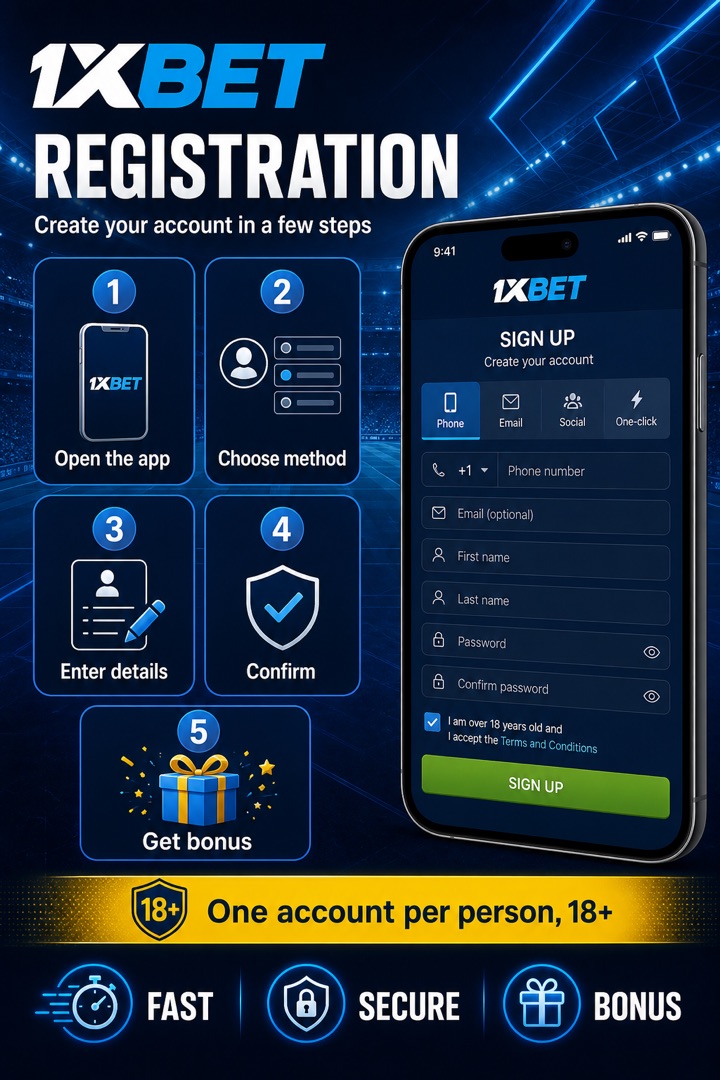
The four registration methods and where to place the promo code.
To create a 1xBet account, use a phone number or e-mail address that you genuinely control. These details may be needed later for logging in, depositing, withdrawing and recovering your account.
Before you confirm, check the country, the currency, the password and the promo code field if an offer requires one. Never share the SMS code or the credentials that were generated.
One-click registration
Open 1xBet from a trusted source.
Click the "Registration" button.
Choose one-click registration if it is offered.
Immediately note down the ID, account number or generated password.
Add a phone number or e-mail if the interface asks for one.
Check the country, the currency and the promo code if you have one.
Confirm 18+ and submit only if the information is correct.
Registration by phone
Open the registration page.
Click the "Registration" button.
Select the "Phone number" option.
Enter your phone number in the required format.
Check the country, the currency and the promo code if an offer requires one.
Wait for the SMS code and enter it only in the interface you opened yourself.
Keep the ID and password in a safe place.
Registration by e-mail
Go to the 1xBet website.
Click "Registration".
Choose the "By e-mail" option.
Fill in the registration form with your personal details, including your e-mail address, name and password.
Select your country and your currency.
Add a promo code only if you know it is valid.
Accept the terms and conditions.
Click "Register" to create your account.
Via social networks
Registration via a social network should only be used if the option appears in the interface. The linked social account must remain accessible and protected.
A promo code can change the terms of an offer, but it does not guarantee a win. Always read the minimum deposit, the wagering rules, the deadline and the regional validity.
Open the 1xBet betting site.
Select "Registration".
Choose the "Social networks" option.
Pick the social network you want (for example: Facebook, Twitter, Google).
Log in with your account on the selected network.
Allow 1xBet to use your profile information.
Enter a promo code only if the offer requires one.
Review the details filled in automatically and complete them if necessary.
Accept the terms of use.
Finish registering by clicking "Register".
Promo code
Maxx200bet
Welcome bonus 200% on your 1st deposit — cap depends on your country and currency (BDT, INR, PKR, NGN, KES…)
Enter it only if the offer is visible in your account. A bonus depends on the country, the currency, the minimum deposit and the wagering.
First bet
Placing your first bet in the app
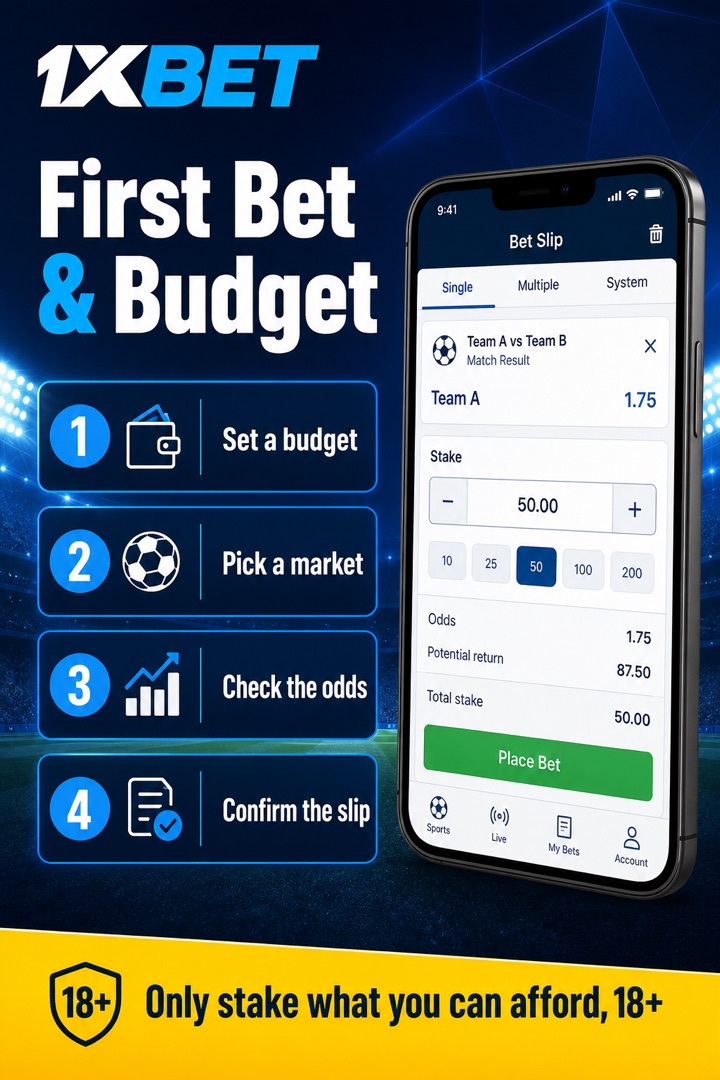
For a first bet, keep it simple. Pick a sport you understand, read the market, check the odds and avoid building an over-long accumulator.
After you confirm, track the ticket status in your account. Don't stake more money to chase a loss.
Infographic: using favourites, notifications, scores and statistics without betting under pressure.
Log in: Use your e-mail address or phone number and password to log in to your account.
Select the sport: pick a match or event you know how to read.
Choose the event: open the market and look at the live odds if the match has already started.
Choose your bet type: select a single bet, an accumulator or a live bet depending on your level.
Set your stake: enter an amount you can afford to lose.
Check your bet: re-read the selection, the odds, the market and the amount.
Confirm your bet: if everything is correct, click "Confirm" to place your bet.
Payments
Available payment methods
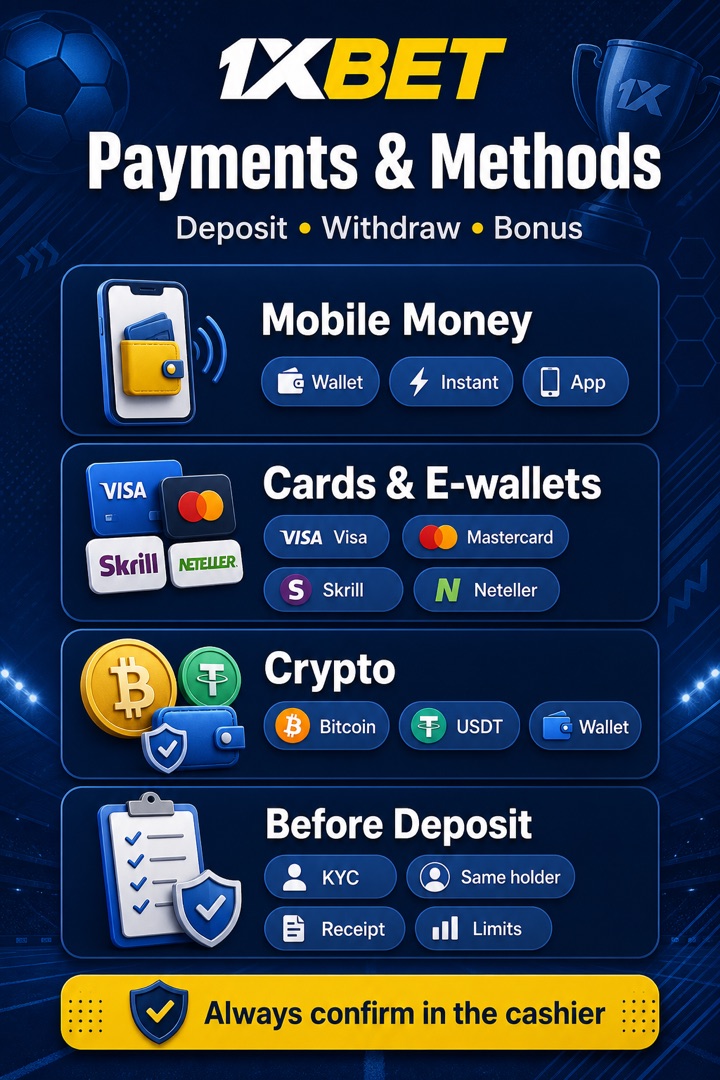
The available payment methods can vary depending on the country, the account and the cashier shown at the time of the transaction. Before any deposit or withdrawal, look only at the options visible in your account.
Visa/Mastercard cards, e-wallets, bank transfer, cryptocurrencies and mobile money may be available depending on the region, but no method should be assumed available without checking.
Across the target markets, local payments may include bKash, Nagad, Rocket, UPI, Paytm, PhonePe, GCash, Maya, JazzCash, Easypaisa, eSewa, Khalti, Paystack, OPay, M-Pesa, telebirr, MTN MoMo, Airtel Money, Telecel Cash, EVC Plus, Touch 'n Go or GrabPay depending on the country. The currency may be BDT, INR, PHP, PKR, SOS, NGN, MYR, KES, ETB, ZMW, NPR, ZAR, GHS, UGX, TZS, CAD or SGD depending on the account.
Before choosing a method, check any fees, the limits, the processing time, the account holder's name and the verification documents that may be requested to secure a withdrawal.
Infographic: create your account, check the codes and choose a suitable payment method.
Payment method
Common use
Check before using
Visa / Mastercard
Deposit by bank card
Bank, limit, 3-D Secure, fees and crediting time
E-wallets
Skrill, Neteller or ecoPayz if offered in the cashier
Account holder name, fees, limits and local availability
Bank transfer
Larger amounts depending on the bank
Longer processing time, exact references and bank fees
Cryptocurrencies
Bitcoin, Ethereum or Litecoin if available
Exact network, address, blockchain confirmations and network fees
Prepaid cards
One-off solution if accepted
Limits, fees and whether withdrawal is actually possible
bKash / Nagad / Rocket
Mobile deposit or withdrawal in Bangladesh if the option appears
Number, holder, limit, receipt, fees and operator processing time
UPI / Paytm / PhonePe
Common mobile payment in India and other markets
Local availability, account holder name, limit and KYC status
GCash / Maya
Mobile wallets in the Philippines depending on the operator
Limit, fees, account currency and transaction confirmation
JazzCash / Easypaisa
Mobile wallets common in Pakistan
Availability in the cashier, fees, receipt and processing time
Paystack / OPay
Bank transfer and mobile payment in Nigeria if offered
Number, holder, limit, currency and withdrawal time
M-Pesa
Mobile payment common in Kenya and Tanzania
Country, number, holder, KES/TZS currency or other currency shown
MTN MoMo / Airtel Money / Telecel Cash
Local mobile wallets in Ghana, Uganda and Zambia
Actual availability in the cashier, OTP, receipt and processing time
telebirr / EVC Plus / Zaad
Local options in Ethiopia and Somalia
Use them only if they appear in your 1xBet account
Touch 'n Go / GrabPay / FPX
Methods linked to Malaysia and nearby markets
Country, bank, restrictions, proof of payment and local currency
AstroPay / BinancePay
E-wallet or crypto depending on regional availability
Fees, network, conversion, exact address and whether withdrawal is possible
Guide
Bet types & sports markets
Understand every bet format and every market before you fill in your bet slip. Choose the type that fits your strategy, then target the market that reflects your read of the match.
In an accumulator, the odds multiply: here 1.80 × 2.10 × 1.50 = 5.67. Every selection must win to cash out.
Bet type
Principle
Who it's for
Single bet
A single bet contains just one selection on one event. Total return = stake × the single odds.
The single bet suits the beginner who wants a clear, easy-to-read risk (e.g. the favourite to win).
Accumulator
The accumulator combines several selections on a single slip. The odds multiply; every selection must win.
The accumulator suits the punter chasing big odds on a multi-match football weekend.
System bet
The system bet creates several combinations from a group of selections. The slip can still win even if one selection loses.
The system bet suits the player who wants to reduce the risk of an accumulator without losing everything on a single slip-up.
Chain bet
The chain bet links a series of independent single bets. The return from one bet funds the stake of the next.
The chain bet suits the methodical player who manages a bankroll bet by bet across several separate events.
Markets and choosing your bet
Main markets
1X2Home win, draw or away win
Double chanceTwo outcomes covered (1X, 12 or X2)
HandicapFictional goal/point head start or deficit
Over / UnderTotal goals above or below a threshold
Half-timeResult or total over the first half
GoalscorerPlayer who scores (first, anytime)
Choosing the right market
Tight matchDouble chance to play it safe
Clear favouriteHandicap to boost the odds
Attacking sidesOver on goals
Reading by periodHalf-time market
Odds format: decimal, fractional, American
The same odds are shown in three formats depending on how you like to read them — pick the one that speaks to you:
Decimal 2.50
The total return for 1 unit staked. The most common format across these markets.
Fractional 3/2
The net profit relative to the stake, in the British tradition.
American +150 / -200
Positive = profit on 100 staked; negative = stake needed to win 100.
Open the display settings (settings or profile icon).
Find the "Odds format" option in the preferences.
Select Decimal, Fractional or American.
Confirm: the whole site and the app switch to that format.
Your 1xBet account shows where the format selector sits and which markets are available for the chosen event. The active local offer determines which markets are visible. No fixed odds are guaranteed: the values change live.
Live
Live betting & streaming
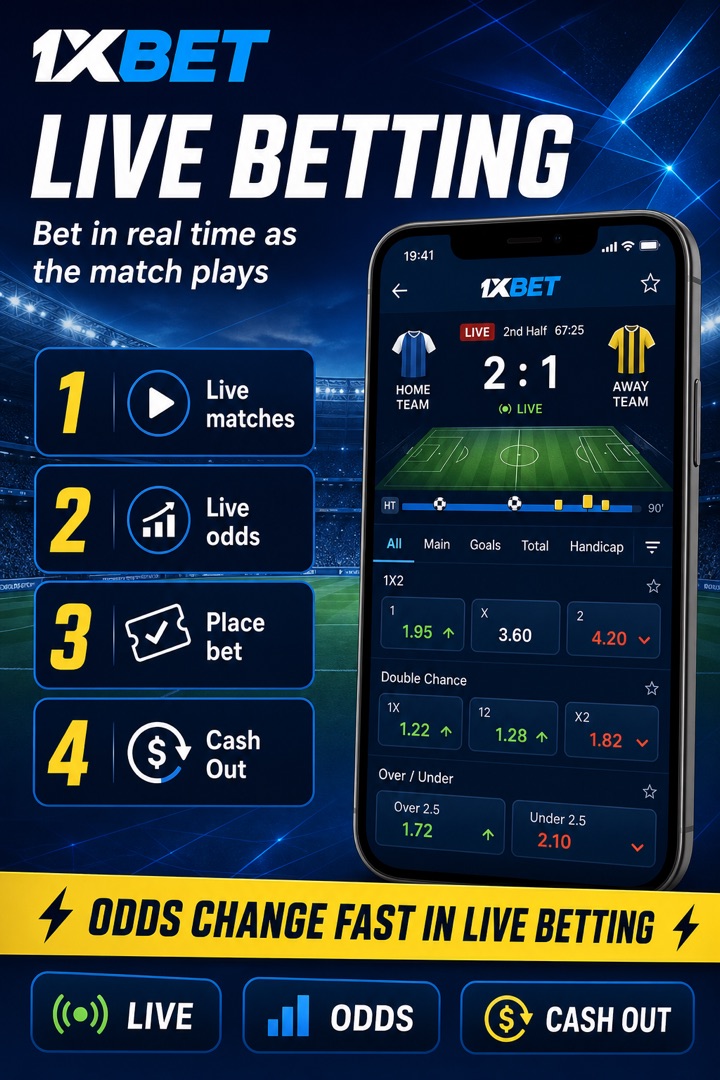
The 1xBet Live section brings together the sports matches being played right now — football, tennis, basketball, hockey and many more. It stays separate from live casino and virtual sports: here you bet on real fixtures as they unfold, with odds that shift with every play.
In Live, you bet on real ongoing matches: odds that shift with every play, Multi-Live tracking, streaming and live statistics.
A live bet uses the events of the match as a signal. 1xBet recalculates the odds after a shot on target, a card, a goal or another key moment. The player compares the score, possession, shots and time remaining before confirming a live stake.
Feature
Description
Dynamic odds
The odds recalculate in real time as the match unfolds; a key event moves them immediately.
Multi-Live
Display and follow several matches side by side on one screen, without leaving the page, to seize the opportunity at the right moment.
Live statistics
Live data: attacks and dangerous attacks, possession, shots, corners, yellow and red cards, so you can decide on the facts.
Built-in streaming
In-page video player for broadcast events; ideal for following the action and betting live in the same place.
Cash Out
Close an open bet via the Sell / Cash Out option to secure a return or limit a loss before the final whistle.
Placing a live bet takes just a few taps, on the site as on the mobile app:
Log in to your 1xBet account and open the Live section.
Choose the sport, then the ongoing fixture you're interested in.
Check the live statistics and, if available, start the stream via the TV icon.
Click the odds of the market you want (winner, next goal, handicap, total…) to add it to the slip.
Enter your stake, check the displayed odds and confirm before they change.
Follow your bet live and, if the option appears, use Cash Out to cash out before the end.
The stream opens right in the page: spot the play / TV icon on a broadcast event, click, and the player starts. You don't need an existing bet — an active account (positive balance or an open bet) is usually enough.
In-page streaming, no third-party app, on desktop and mobile.
Live statistics paired with the video so you can bet at the right moment.
Multi-Live to keep an eye on several matches at once.
Mobile data: video streaming eats into your 3G/4G data plan — expect several hundred MB per half at standard quality. On a mobile network, favour a lower quality or Wi-Fi to preserve your plan; the exact usage varies with the bit rate and is only indicative, to be confirmed with your operator.
Streaming availability: not every event is broadcast, and access depends on competition rights, the region and the account status. The exact balance threshold and the fixtures allowed for your country are to be confirmed in your 1xBet account / according to the current local offer.
Tools
Cash Out & betting tools
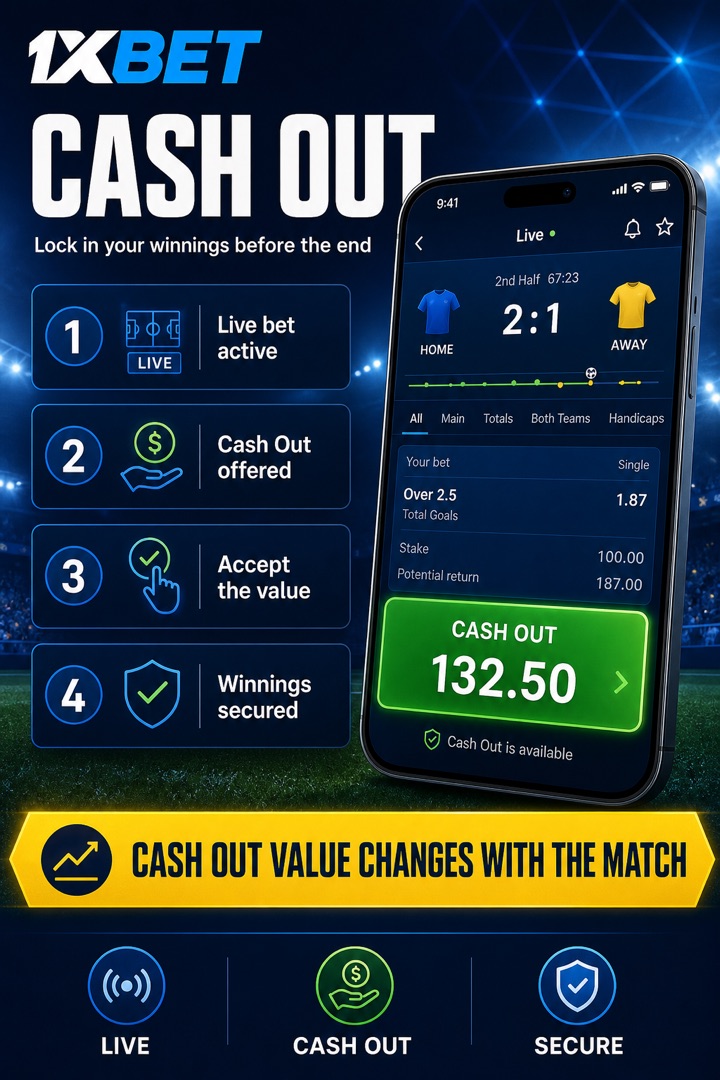
Cash Out (called "Cash Out" on your slip) closes a bet before the event ends. The value offered comes from the live odds: higher than your stake if your selection is ahead, lower if it has turned, but you get some of your funds back either way. 1xBet charges no fee on this operation.
Cash Out closes a bet before the end: the value is recalculated live, in full, partial or automatic mode. 1xBet charges no fee.
Cash Out modes
Full Cash Out
ActionCloses the whole slip
AmountAmount offered, credited straight away
When to use itSecure a return or limit a loss in one go
Partial Cash Out
ActionSlider to sell a percentage
Rest of the betKept in play until the final whistle
When to use itLock in part of the profit, let the rest run
Auto Cash Out
ActionYou set a cash-out threshold
TriggerAutomatic sale as soon as the threshold is reached
When to use itNot glued to the match: the system executes for you
The cash-out button (an icon or an amount) appears next to eligible open bets, both pre-match and live, on most single bets and accumulators. If the icon is missing or shows "unavailable", that bet cannot be sold. The value recalculates in real time with every move in the odds: it rises when your prediction holds up and drops as soon as it weakens.
The amount offered follows the live odds and market liquidity, second by second.
The option is briefly suspended during hot moments (a goal or card being reviewed) or when a market is locked.
Some accumulators, system bets and market types are excluded from Cash Out.
Cashing out a bet in the app
Log in, then open the "My bets" menu and the open bets tab.
Find the bet showing the Cash Out icon / amount on the right of the row.
Choose the mode: full, partial (set the slider to the percentage to sell) or Auto (enter your target threshold).
Check the value shown, which refreshes in real time before you confirm.
Confirm "Sell the bet". The amount is credited to your balance straight away, with no 1xBet fee.
Worked example (Cash Out)
Stake500 BDT · odds 2.00
Potential return if it wins1 000 BDT
80th min, you're leading 1-01xBet offers a cash-out
Full Cash Out≈ 700 – 850 BDT, secured
Partial Cash Out≈ 350 – 425 BDT + the rest still running
The exact value depends on the live odds at the moment you click.
The BDT values above are for illustration: the real amount varies with the live odds and liquidity. Whether there is a minimum/maximum Cash Out amount and the exact list of excluded markets are to be confirmed in your 1xBet account / according to the current local offer, and regional restrictions may also apply.
Edit Bet — change or remove a selection
Edit Bet adjusts a bet you've already placed without cancelling everything: you can remove a selection from an accumulator, add a new one or change the order of your picks. 1xBet recalculates the total odds and the stake after the change, as long as the events involved haven't started or aren't locked. Handy for fixing a leg of an accumulator you no longer feel confident about, rather than losing the whole bet.
AdvanceBet — bet on pending winnings
AdvanceBet ("Advancebet") frees up a stake advance calculated from your open, not-yet-settled bets. This lets you place new predictions backed by potential winnings that haven't been credited yet, without waiting for your open slips to be settled. The advance amount available depends on your active bets and their odds.
The availability, caps and exact terms of Edit Bet and AdvanceBet are to be confirmed in your 1xBet account / according to the current local offer.
Cashier
1xBet deposit and withdrawal, step by step
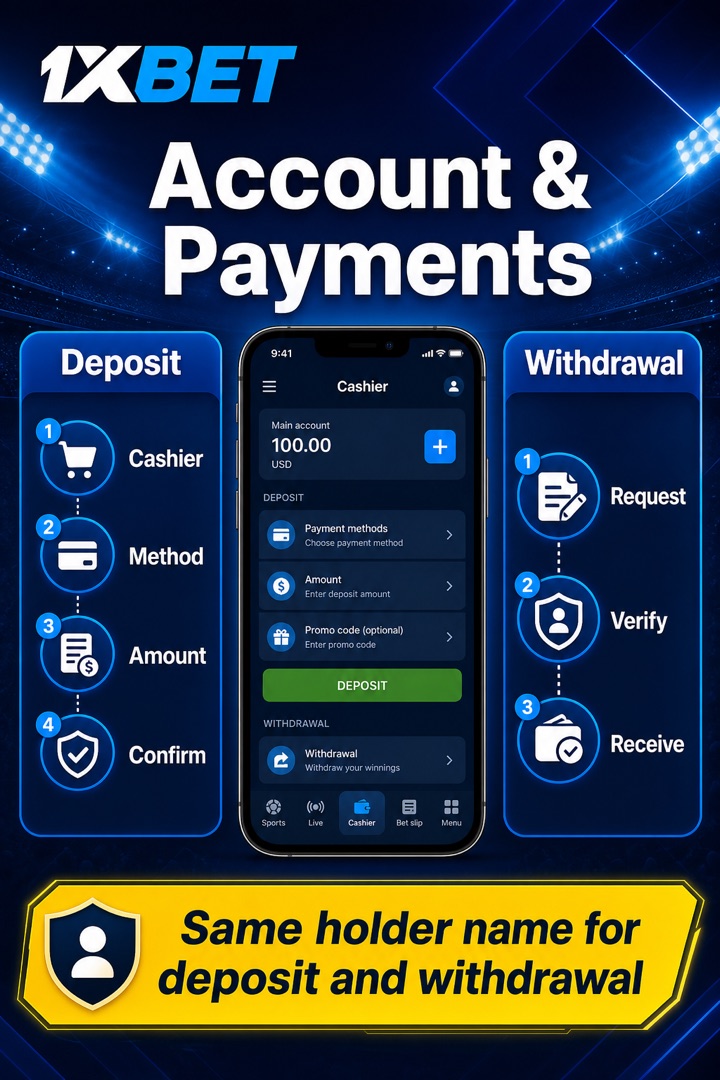
The 1xBet cashier handles local deposits and withdrawals in a few steps. Make sure your account currency is set correctly (BDT, INR, NGN, KES, etc.) before any transaction, then follow the flow below for your operator.
Instant deposit, 0% fee on the 1xBet side (operator fees possible). Withdrawal follows the mirror flow, usually 5–30 min.
Local deposit
Log in, then open the cashier: tap your name or your balance and choose "Make a deposit" in the app, or open the deposit menu on the site.
Choose your method: bKash, Nagad, UPI, GCash, JazzCash, M-Pesa or Paystack depending on your country.
Enter your phone number and the amount to credit.
Confirm the request, then validate on the provider side: some wallets use a merchant payment code via USSD or app, while others validate the push or the requested PIN.
The funds are credited instantly. Platform fee: 0 (provider fees may apply).
Local withdrawal
Log in and open the "Withdrawal" page of the cashier.
Choose your withdrawal method, within the same provider family you deposited with.
Enter the amount to withdraw and the recipient mobile number or account, which must be in your name.
Confirm ("Submit the request") and complete identity verification (KYC) if it is required.
Track the status in your transaction history; the funds arrive in the wallet or account.
Withdrawal requires a verified account: if your identity hasn't been validated yet, the operation may be blocked until KYC is finalised. Get this step done in advance to avoid any delay on your first withdrawal.
Indicative amounts: minimum deposit quoted around 100 BDT, minimum withdrawal around 500 BDT. The value shown in the cashier at the time of the transaction is what counts: USSD codes, minimum/maximum amounts and processing times vary by provider and over time, to be confirmed in your 1xBet account / according to the current local offer.
Promos
Other recurring promotions
Beyond the welcome bonus, 1xBet runs a calendar of recurring offers: odds boosts, accumulator of the day, weekly reloads, freebets, cashback and tournaments. These promos usually require an opt-in and come with wagering and minimum-odds requirements. Names, caps and availability vary by period and according to the current local offer.
Recurring promotions: opt-in and wagering/minimum-odds conditions required. Names, caps and availability vary — check the current local offer in the app.
Promotion
Description
Frequency
Accumulator odds boost
An extra percentage added to eligible accumulator bets: the more selections you add, the higher the odds boost climbs.
Permanent offer
Accumulator of the day
A pre-built accumulator offered each day; if it wins, it pays an enhanced return. Available pre-match and live.
Daily
Lucky Friday
A Friday deposit reload with opt-in required and wagering conditions on an accumulator at minimum odds. A linked Wednesday x2 can complete the cycle.
Weekly
Freebet / free bet
Free bets via promo codes, the "Bonus games" loyalty wheel and the promo points shop (exchange points for freebets). The Promotions page shows this freebet only when a campaign is active.
Active campaign
Bet insurance (non-VIP cashback)
An "Advancebet"/insurance option to cover a single bet or accumulator: a losing slip returns all or part of the insured stake. Available to everyone, outside the VIP programme.
Recurring offer
Tournaments & jackpot
Sports and casino leaderboards and tournaments with prize pools; the titles rotate continuously. Names and prizes are time-limited.
Ongoing
The Promotions page of your 1xBet account shows the names, caps, boost percentages and wagering requirements that apply to your profile. A promotion visible at brand level may be absent in your country. Check the terms in the app before any opt-in.
Help
Contacting 1xBet support
1xBet support answers in English across several channels. The live chat built into the site and the app is the most direct way to open a support conversation. Your account or the official Contact page shows the exact details for the other channels.
The 24/7 live chat is the channel to try first. Your account or the official Contact page shows the numbers, the hotline and the Telegram handle you can use.
Dedicated local e-mailAddress shown in the account
Telegram & messengers
Messengers listedTelegram, WhatsApp, Messenger
Official linkvia the Contact page (verified links)
WhatsApp handle / numberDetail shown in the account
For the phone, the hotline and any WhatsApp number, open the Contact section of the 1xBet site or app: the number shown in the app/Contact section is kept up to date for your country. Don't use a number taken from a third-party site or an affiliate page without first checking it in your personal area.
Open the 24/7 live chat (EN) to raise a support request from your account.
Use e-mail for complex requests that need attachments (KYC, account security).
Check Telegram, phone and callback via the official Contact page before contacting them.
Have your account ID ready before any conversation to speed up handling.
Your 1xBet account shows the phone numbers, the hotline, the Telegram handle, the WhatsApp number and the e-mail address available for your country. Refer to the number shown in the app or in the official Contact section, and ignore contact details from third-party or affiliate sites.
Account
1xBet login & account troubleshooting
Can't log in to your 1xBet account anymore? First, tell an account problem (password, lockout, credentials) apart from an app installation error. Follow the right procedure below and keep your account ID within reach.
"Forgotten password" sends a reset link by e-mail or SMS. If the account is locked, contact support with your account ID.
A failed login almost always comes down to one of these causes: a wrong or forgotten password, an account ID typed incorrectly, an expired session, or an account temporarily restricted for verification. Start by resetting the password, then run through the network and credentials checklist.
Forgotten password: reset
Open the 1xBet app or site and tap Log in, then the "Forgotten password?" link below the input field.
Choose the recovery method: by e-mail (the address linked to the account) or by phone number (the number registered at sign-up).
Enter the e-mail address or the number, then confirm. A verification code or a reset link is sent to you.
Enter the code received by SMS / e-mail, then set a strong new password (letters, numbers, special character).
Log back in with your account ID and the new password. Remember to memorise it or save it somewhere safe.
If no e-mail or SMS arrives (spam folder checked), or if the linked address / number is no longer accessible, use the 24/7 live chat on the site or app: it's the fastest channel to get your access unlocked. The exact local support contact details (dedicated e-mail, phone, messengers) are to be confirmed in your 1xBet account / on the official Contact page.
Failed login: quick checks
Check the account ID and the password: turn off auto-capitalisation and watch for spaces before/after what you type.
Confirm your network connection: try Wi-Fi then mobile data, and reload the page once the connection is stable.
Update the app to the latest version and clear the cache if the login page doesn't load properly.
Try another access channel: if the app fails, open the site in the browser (or the other way round) to isolate the problem.
Temporarily turn off VPN / proxy and any blocker: access can depend on the region and regulatory restrictions.
After several failures, wait a few minutes: an attempts limit may briefly suspend login before a new try.
Locked or suspended account: what to do
An account can be restricted for identity verification (KYC), activity considered unusual, or breaking the terms of use. In that case, don't open a second account: contact support and keep your account ID and the identity documents requested.
Contact the 24/7 live chat (site and app), giving your account ID and the nature of the block.
Prepare your KYC documents (ID, proof) if verification is required to lift the restriction.
Ask for the precise reason and the resolution time; then follow the instructions given by official support.
Recovering your account ID
The account ID is assigned to you at sign-up and usually appears in the welcome e-mail or in the profile section once you're logged in. If you've lost it, find it again via the registration summary, or ask support while proving the e-mail / phone number linked to the account. Never share your password: an official agent will not ask you for it.
The exact support channels and contact details for your country (dedicated e-mail, phone line, Telegram / WhatsApp) are to be confirmed in your 1xBet account / on the official Contact page. Favour the built-in live chat: it's the authenticated and most reliable channel for any question about login or your account.
Conclusion
Conclusion on 1xBet
In short, this guide explains the main ways to access 1xBet: Android APK, App Store on iOS, mobile site and Windows software. Choose the option that matches your device.
Before you download, deposit or play, check the source, the account terms, the local rules, your budget and the payment times. A promo code or a bonus never guarantees a win.
Infographic: re-read the selection, the odds and the amount before a first bet.
Verified data
Verified 1xBet data: APK, iOS, bonus and payments
The APK and App Store data were reviewed on 16 June 2026. The bonus/payment amounts below serve as a reference grid for this guide; the limits and methods shown in your 1xBet account take priority.
Link the deposit/withdrawal to the account holder.
Different number, cropped receipt, missing transaction ID.
APK permissions: risk and control
Group
Why the app requests it
Risk if misused
Recommended control
Internet / network
Account login, odds, payments, live.
Essential; watch out for fake APKs.
Don't install an unknown mirror.
Location
Country, compliance and market availability.
Sharing your position isn't needed all the time.
Allow only while using the app if Android offers that.
Camera / mic
Document scan, selfie or KYC video.
Sensitive access outside verification.
Deny until the KYC step, then revoke if not needed.
Storage / files
Download, cache, supporting documents.
Reading unrelated files if the APK is modified.
Limit to the photos/documents needed.
Notifications
Match alerts, account status, promotions.
Click pressure or promotional spam.
Turn off alerts you don't need.
Biometrics
Faster login if enabled.
Local access on a shared phone.
Optional; keep a strong device lock.
What we tested
Downloading the APK file, the file size and the SHA-256 comparison.
Reading the Android permissions and checking the org.xbet.client1 package.
Install/open scenario on Android 7.0+ with the unknown-source permission removed after installation.
App Store listing: publisher, version, rating, reviews, size and minimum iOS version.
Checking the local bonus and payment terms shown; no real deposit or withdrawal is carried out by this page.
KYC/support checklist: expected documents, reasons for rejection and evidence to keep before a withdrawal.
Editorial method
How leosproduce.com verifies this 1xBet page
Every update separates the facts measured by our editorial team from the elements that still depend on your account, your country or the 1xBet interface.
APK, version and SHA-256
We check the file actually served by this page: name 1xbet.apk, size, minimum Android version, package org.xbet.client1 and SHA-256 fingerprint. If the fingerprint changes, the visible text and the JSON-LD data must be brought in line.
Bonus and promo code
Bonus amounts are treated as commercial terms, not as promises. The page states what is publicly verified and asks the reader to confirm the code, the minimum deposit, the rollover and the country in their account.
Payments and local wallets
bKash, Nagad, UPI, GCash, JazzCash, M-Pesa, Paystack, Airtel Money, card or crypto can vary by country. We don't validate any payment method as universal: the reader must look at the cashier, the account holder, the fees, the limits and the KYC status before any transaction.
Reader feedback
The reviews and questions below help spot recurring problems: blocked installation, uncredited deposit, missing bonus, delayed withdrawal, iPhone or a different SHA. Short or sensitive messages may be moderated before publication.
Last editorial review: 1 July 2026. This check does not replace the terms shown in your 1xBet account and does not guarantee any win.
Author
About the author of this 1xBet guide
Who tests and verifies the content of this 1xBet APK guide.
Modeste Eyenga
Writer — sports betting & mobile apps · Lagos, Nigeria
Modeste has been testing betting apps (1xBet, Betwinner, Melbet) on Android and iOS since 2019. Before every publication, he checks the file source, the SHA-256 signature, the Android permissions and the updates. Tested and verified by Modeste Eyenga.
The key terms for understanding the app, betting and bonuses — explained simply.
A
APK
The installation file for an Android app, distributed outside the Google Play Store.
AdvanceBet (bet advance)
Staking an estimated amount while a bet you've already placed is not yet settled.
Aviator
A "crash" game with a rising multiplier: you have to cash out before the crash (publisher: Spribe).
C
Cash Out
Cashing out a bet before the event ends to secure a return or limit a loss.
Odds
The ratio that sets the potential return on a bet: odds of 2.00 double the stake if the bet wins.
F
Freebet (free bet)
A free bet where only the net winnings, not the stake, are credited to the account.
K
KYC
"Know Your Customer": the identity verification (ID + selfie) required before your first withdrawal.
M
Mobile payment
Local mobile payment (bKash, Nagad, UPI, GCash, JazzCash, M-Pesa, Airtel Money) for depositing and withdrawing.
P
Accumulator
A single ticket combining several selections; the odds multiply and all of them must win.
Live betting (Live)
Betting while the match is being played, with odds that change in real time.
PWA
The web version you can install on the home screen, useful on iPhone where the APK doesn't work.
S
SHA-256
The unique fingerprint of the APK file that lets you check it hasn't been modified.
W
Wagering (wagering requirements)
The number of times a bonus must be replayed before it can be withdrawn.
#
1xGames
1xBet's suite of proprietary mini-games (dice, cards, wheel of fortune, etc.).
FAQ
1xBet FAQ
Google Play restricts real-money betting apps in many countries. On Android, 1xBet may therefore be offered as an APK file; always check the source, the size and the SHA-256 before installing.
The APK installs only on Android, the iOS app comes via the App Store if it's available in your country, and the mobile site runs in Safari or Chrome without installing any file.
bKash may appear in the 1xBet Bangladesh cashier depending on the account and the moment. Before depositing, check that bKash is visible, that the currency is BDT and that the limits shown suit you.
A Mobile Money withdrawal can be fast, but the time depends on the method, the KYC status, the account holder's name and the operator. Keep the receipt and the transaction ID if the payment is slow.
Delete the incomplete file, free up space, re-download the APK, temporarily allow the source in Android, then compare the size and the SHA-256 before opening the app.
On Android, use a file manager or a hash app; on a computer, use sha256sum or certutil. The fingerprint must match exactly the one published on this page.
No. APK is an Android format. On iPhone, use the App Store or Safari.
You can install the app first, then create or open your account.
Android protects the device against unknown sources. Allow the source only if you've checked the file.
Compare the version offered on the download page with the one installed on your phone.
It's only useful for compatibility. An older version may be less stable or less secure.
Delete the file, free up space, check the connection and start the download again.
No. Keep it on only long enough to install the app, then turn it off in the Android settings.
It can be enough if you don't want to install a file, but the APK remains the dedicated Android option.
The 1xBet download applies across many markets, including Bangladesh, India, the Philippines, Pakistan, Somalia, Nigeria, Malaysia, Kenya, Ethiopia, Zambia, Nepal, South Africa, Ghana, Uganda, Tanzania, Canada and Singapore. Always check the account country, the currency and the source of the APK file.
bKash, Nagad, UPI, GCash, JazzCash, Easypaisa, M-Pesa, Paystack or Airtel Money may appear depending on the country and the account. Before a deposit or a withdrawal, check the cashier, the limits, the fees, the account holder and the processing time.
No. A promo code depends on the country, the currency, the minimum deposit and the terms shown in the interface. A bonus never guarantees a win.
1xBet shows your local currency, such as BDT, INR, PHP, PKR, NGN, KES, ZAR, MYR or SGD. Check the currency shown in the account before depositing, claiming a bonus or withdrawing.
Use a number in the same name as the account, keep the wallet or bank receipt, complete KYC and prepare a national ID card, passport, selfie or proof of address if requested.
A modified APK can steal your credentials or block payments. Stick to a trusted source, check the version, size and SHA-256, run an antivirus scan if possible, then turn off unknown sources.
No. A VPN, a mirror or a fake button can create the wrong account country, an unchecked file or a KYC block. Check the domain and the visible source before downloading.
Check the account country, the local currency (BDT, INR, NGN, KES…), the local wallets, the promo code, the minimum deposit, the limits, KYC and App Store or Android APK availability.
Cash Out lets you cash out a bet before the event ends to secure a return or limit a loss. Its availability isn't guaranteed: it can depend on the country, the app version, the event and the account. Check the Cash Out button in the bet slip before you stake.
You can generally place a single bet, an accumulator (several selections on one ticket, whose odds multiply and which must all win) or a live bet (Live). Choose the type according to your level and re-read the odds, the market and the amount before confirming.
Live betting means betting while the match is being played, with odds that change in real time. You can follow the live odds, the statistics and, on some events, the broadcast. A good mobile connection is recommended, and the odds can change just before you confirm.
If a deposit isn't credited, an OTP isn't received or KYC is rejected, you can open a support ticket, use the live chat or the help centre. Keep the transaction ID, the receipt, the number used and the payment time; support may also ask for the currency and method used. 24/7 customer support is available if shown in your account.
Use the reset option on the login screen via the e-mail or phone number linked to your account. Never enter your password in an external window and don't share confirmation codes. Use a unique password and enable 2FA if it's offered.
Before any deposit or withdrawal, open the cashier and use only the methods visible in your account (Visa/Mastercard card, e-wallet, bank transfer, cryptocurrency or Mobile Money depending on the country). Check the fees, the limits, the processing time, the account holder's name and the KYC status. A withdrawal can be blocked if verification is incomplete; times are often 24 to 48 h depending on the method.
Enter the promo code only if the offer is visible in your account, then make your first deposit so it's boosted at the advertised rate. The bonus cap, the minimum deposit and the wagering requirements depend on your country and your currency (BDT, INR, PKR, NGN, KES…). A bonus never guarantees a win.
Log in with your e-mail or number and your password. Choose a sport you know how to read, open the event, check the live odds if the match has started, select the bet type, enter a stake you can afford to lose, re-read the selection, the odds, the market and the amount, then confirm. Don't stake more money to chase a loss.
Depending on the calendar, you can look for cricket (IPL and World Cups), football, the Premier League, UEFA competitions, local leagues, live betting and live odds.
Not guaranteed. Aviator, Cash Out, detailed statistics, streaming or dark mode can depend on the country, the app version, the event and the account.
Set a budget, use deposit or session limits if they exist, and look for self-exclusion or an account pause if gambling becomes hard to control.
Keep the receipt, the transaction ID, the number used, the payment time and the proof of transaction. If the OTP doesn't arrive, the deposit stays uncredited or KYC is rejected, open a support ticket, use the live chat or the help centre.
Verified answers
Frequently asked questions from players
These editorial answers bring together the most useful issues raised in the reviews: APK installation, Mobile Money payment, bonuses and iPhone.
My phone blocks the installation of the 1xbet.apk file. Is that normal?
Yes. Android blocks unknown sources by default. Allow only the browser that downloaded the file, compare the size and the SHA-256, install the app, then remove that permission in the settings.
APK 1 July 2026
My Mobile Money deposit doesn't show up in the account. What should I keep as proof?
Keep the receipt, the transaction ID, the number used, the time of payment and the exact amount. Also check that the account name and the wallet name match, especially before a withdrawal or a KYC verification.
Payments KYC
The promo code or the bonus doesn't appear after registration. Why?
A bonus can depend on the country, on an old account, on the minimum deposit, on the currency and on the wagering conditions. Before depositing, check that the offer is visible in your account and that the promo code is accepted by the interface.
Bonus To check in the account
On iPhone, do I have to download the same APK as on Android?
No. An APK file doesn't work on iPhone. Use the App Store if the app is available in your country, or Safari with the mobile site. Don't install an unknown profile sent by message.
iPhone Mobile site
You can add a review or reply to a reader in the block below. Never post a password, a full number, an OTP code or an identity document.
Reviews
Reader reviews and discussion
Read the visible ratings, reply to helpful questions and add your own feedback on the mobile experience.
4.4/ 5
1,830 ratings29,229 are shown to give context to the app's rating.
5
72%
4
18%
3
6%
2
2%
1
2%
Recent ratings
Rahim Dhaka
2 days ago
★★★★★
Clean install on Android 13. I mainly checked the file size and the SHA-256 before allowing the unknown source.
Priya Mumbai
1 day ago
★★★★★
Same view. The important point is to remove the permission after installation.
Chinedu Lagos
3 days ago
★★★★☆
Good page for comparing the APK and the mobile site. For payments, I recommend checking Paystack or OPay in the cashier before depositing.