Less packaging, by design
The kindest packaging is often no packaging at all. Wherever it can be done well, fresh produce travels best loose — a crate of carrots or a box of apples rarely needs anything wrapped around each item. When some protection genuinely helps, the goal is simple: use the least material possible, and choose materials that don't outlive their usefulness in landfill.
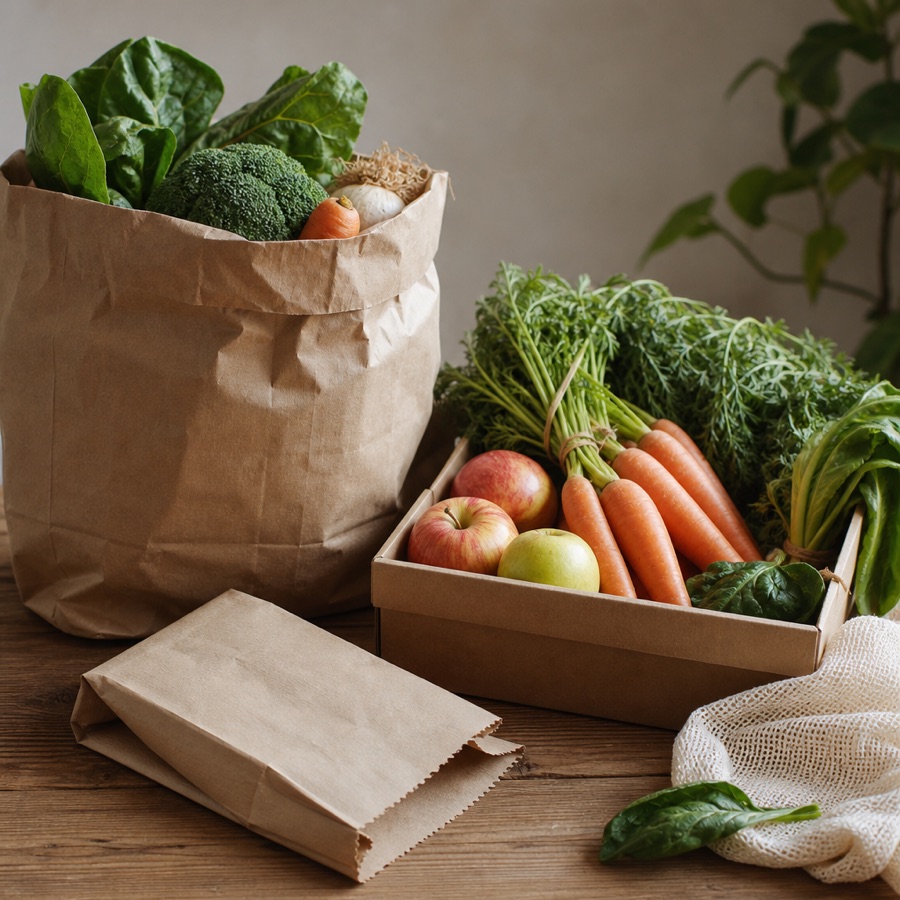
Home-compostable packaging on fruit & veg
Paper we all know. Home-compostable packaging may be newer to you. These materials can look a lot like conventional plastic — but once you're done with them, they properly biodegrade. Instead of fragmenting into microplastics, they break down into carbon dioxide, water vapour and organic matter, much like a plant decomposing.
Crucially, the good ones manage this even at low temperatures — the kind you'd find in an ordinary home compost heap, not just an industrial facility. That's the difference between packaging you have to send away and packaging you can deal with at home.
A quick word on "compostable" plastics: not all are equal. Some so-called degradable plastics are worse than conventional ones — non-recyclable and reliant on high-temperature industrial composting. The label worth looking for is home compostable, certified to recognised standards.
Reusable boxes — the quiet hero
The single biggest win is the box itself. A sturdy produce box that's returned and refilled many times over spares a remarkable amount of cardboard compared with a fresh box every delivery. When a delivery service collects empties on its next round, reuse becomes effortless — you simply leave the box out, and it goes back into circulation.
- Made to last: well-designed boxes are built from largely recycled material and are themselves recyclable at end of life.
- Returned, not binned: leave your box out with the next order and it's collected for reuse.
- Real impact at scale: if everyone returns their boxes, the cardboard saved adds up to thousands of trees a year.
Responsible disposal at home
Good packaging should be easy to deal with once it's done its job:
- Paper — recycle it kerbside, or compost it at home.
- Home-compostable film and liners — add them to your home compost, where they break down naturally.
- Reusable boxes — return them; don't recycle a box that still has many lives left.
The aim throughout is a circle, not a bin: produce arrives fresh, the packaging either composts cleanly or comes back to be used again, and nothing useful is thrown away.
Want the everyday questions answered too? Head to the produce FAQ, or go back to the main guide.